
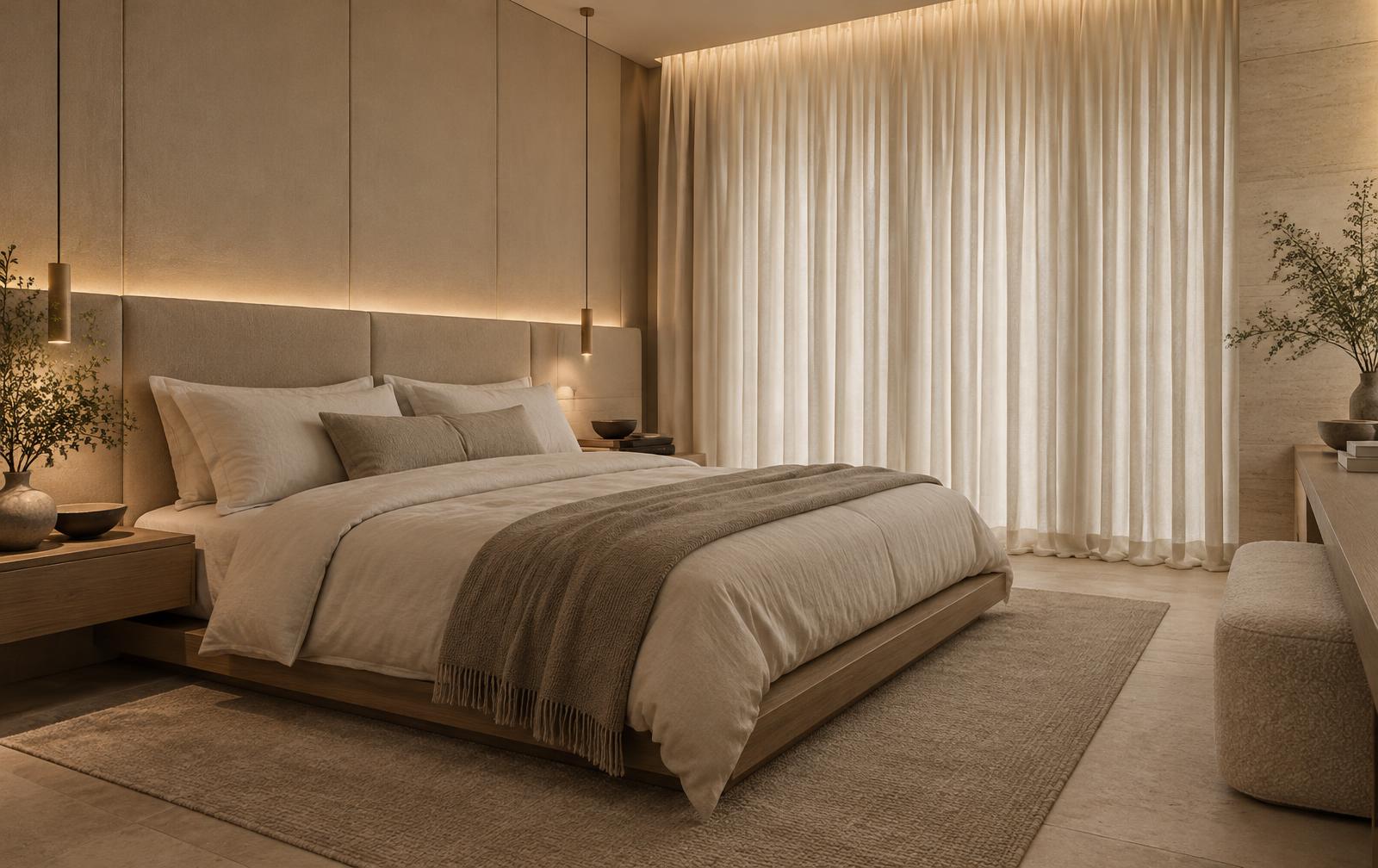
The meaning of luxury in residential design is evolving. Beyond architectural grandeur, exceptional materials and carefully curated furnishings, there is a growing appreciation for homes that offer something more personal: comfort, tranquillity and a sense of retreat from the demands of everyday life.
This shift has brought wellness interior design into greater focus, encouraging a more considered relationship between the spaces we inhabit and the way we experience them.
Natural light, acoustic comfort, tactile materials and connections to nature are becoming increasingly important aspects of contemporary residential design. Together, these elements help establish environments that feel restorative, balanced and intuitively comfortable.
At Earendel Designs, we believe the most meaningful interiors are those that respond to the people who live within them. Through architectural understanding, thoughtful material selection and an appreciation for understated luxury, a residence can become more than a beautifully designed environment. It can become a place of genuine belonging and everyday comfort.
What Is Wellness Interior Design?
Wellness interior design is an approach to creating spaces that places human comfort and everyday wellbeing alongside aesthetics and functionality.
Rather than focusing exclusively on how an interior looks, it considers how the environment is experienced through the senses and how it supports the activities, routines and preferences of its occupants.
Lighting, temperature, acoustics, air quality, spatial organisation and material selection all contribute to this experience.
A thoughtfully designed bedroom may prioritise privacy, acoustic comfort and carefully controlled lighting. A living area may establish a stronger connection to natural daylight and outdoor surroundings, while a bathroom can become a private space for relaxation through considered materials and illumination.
The objective is not to introduce wellness features as decorative additions.
Instead, it is to integrate comfort and environmental considerations into the architectural foundation of the home.
When approached holistically, wellness interior design creates spaces where visual refinement and practical comfort complement one another.
A New Perspective on Luxury Living
For many years, luxury residential interiors were associated primarily with exceptional finishes, impressive architectural features and elaborate detailing.
While these elements remain important, contemporary luxury is increasingly defined by the quality of everyday experience.
A home should feel as comfortable in private moments as it appears when entertaining guests. Its design should accommodate periods of activity as naturally as moments of quiet.
This philosophy encourages a more personal understanding of luxury.
A carefully positioned reading space, a bedroom protected from unnecessary noise or a softly illuminated bathroom can hold as much significance as a grand entrance or sculptural statement piece.
The value lies in how thoughtfully each environment responds to its intended use.
For luxury villas and private residences, this shift presents an opportunity to move beyond purely visual expressions of refinement toward spaces that support a more considered way of living.
Biophilic Design: Strengthening the Connection to Nature
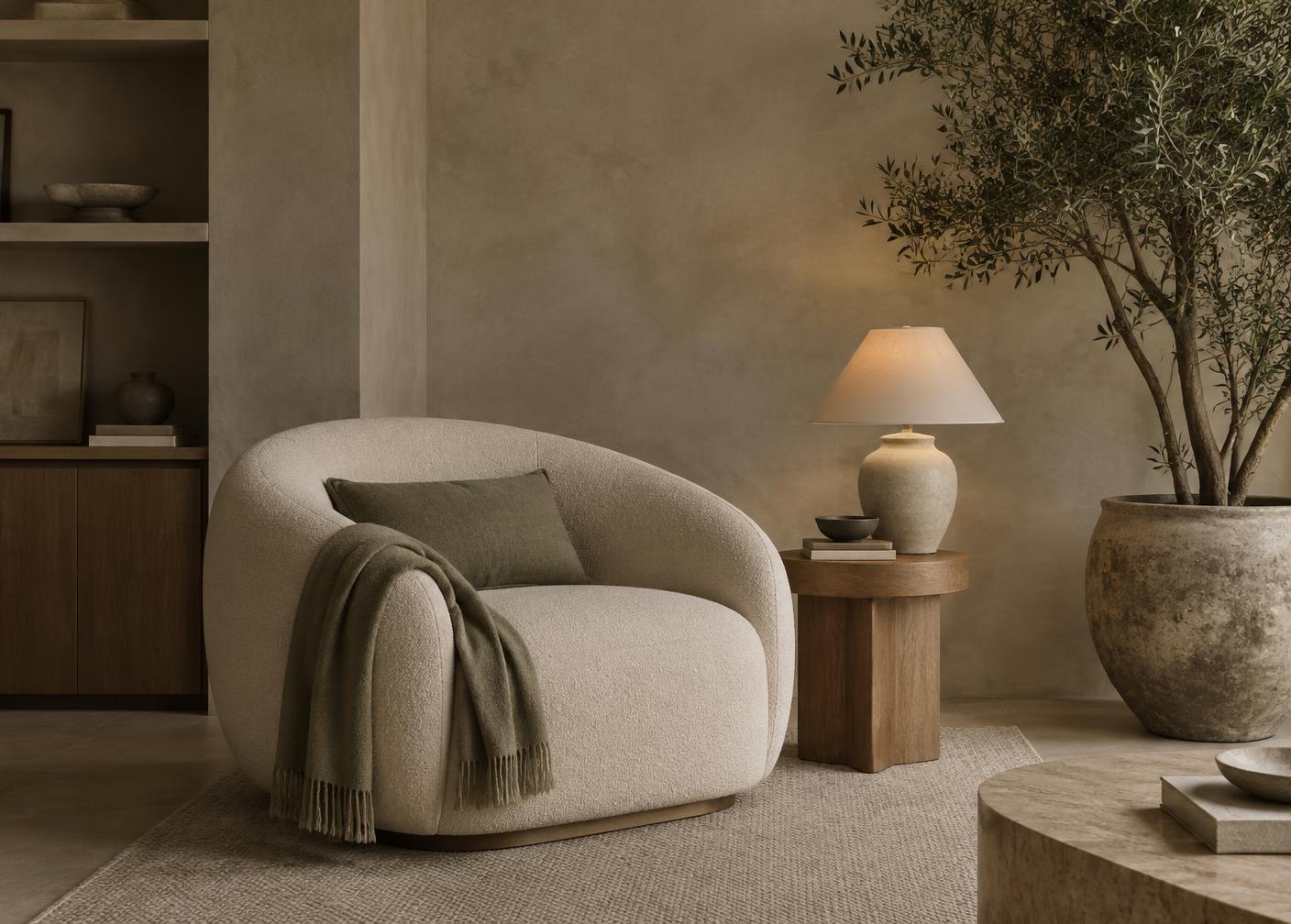
One of the most relevant principles within wellness-focused interior design is biophilic design.
Biophilic design explores how elements of nature can be meaningfully incorporated into the built environment, strengthening the relationship between architecture and the natural world.
This extends far beyond placing indoor plants throughout a residence.
Natural daylight, views toward landscaped surroundings, organic materials and spatial relationships between interior and exterior environments all contribute to a nature-connected design approach.
In a contemporary villa, large openings may establish visual continuity with a landscaped courtyard or private garden. Natural stone and timber can introduce organic variation, while carefully selected textiles and furnishings soften the architectural composition.
The movement of daylight across textured surfaces adds another layer of connection to the surrounding environment.
In Dubai, biophilic design requires careful consideration of climate, solar exposure and the practical demands of maintaining greenery.
Shaded courtyards, protected terraces and suitable indoor planting can introduce elements of nature while respecting these environmental conditions.
The most successful approach is one in which natural elements feel integral to the architecture rather than applied as decoration.
Designing Bedrooms for Rest and Comfort
The bedroom is among the most personal environments within a residence.
Its design should support privacy, comfort and a sense of separation from the more active areas of the home.
A restrained material palette, soft upholstery and carefully layered lighting can contribute to an atmosphere suited to rest.
However, visual simplicity alone is not sufficient.
Acoustic considerations, window treatments, ventilation and temperature control are equally important to the overall residential experience.
Full-height curtains with suitable light-blocking properties can help manage daylight and privacy, while upholstered furnishings and textile elements may soften sound reflections within the room.
Artificial lighting should provide flexibility, allowing brighter illumination for practical activities and softer settings during the evening.
Integrated bedside lighting, concealed architectural details and intuitive lighting controls can further support this adaptability.
At Earendel, we view the bedroom as a space that should feel composed and personal, where every material, furnishing and detail contributes to comfort without unnecessary visual complexity.
Spa-Inspired Bathrooms and Private Retreats
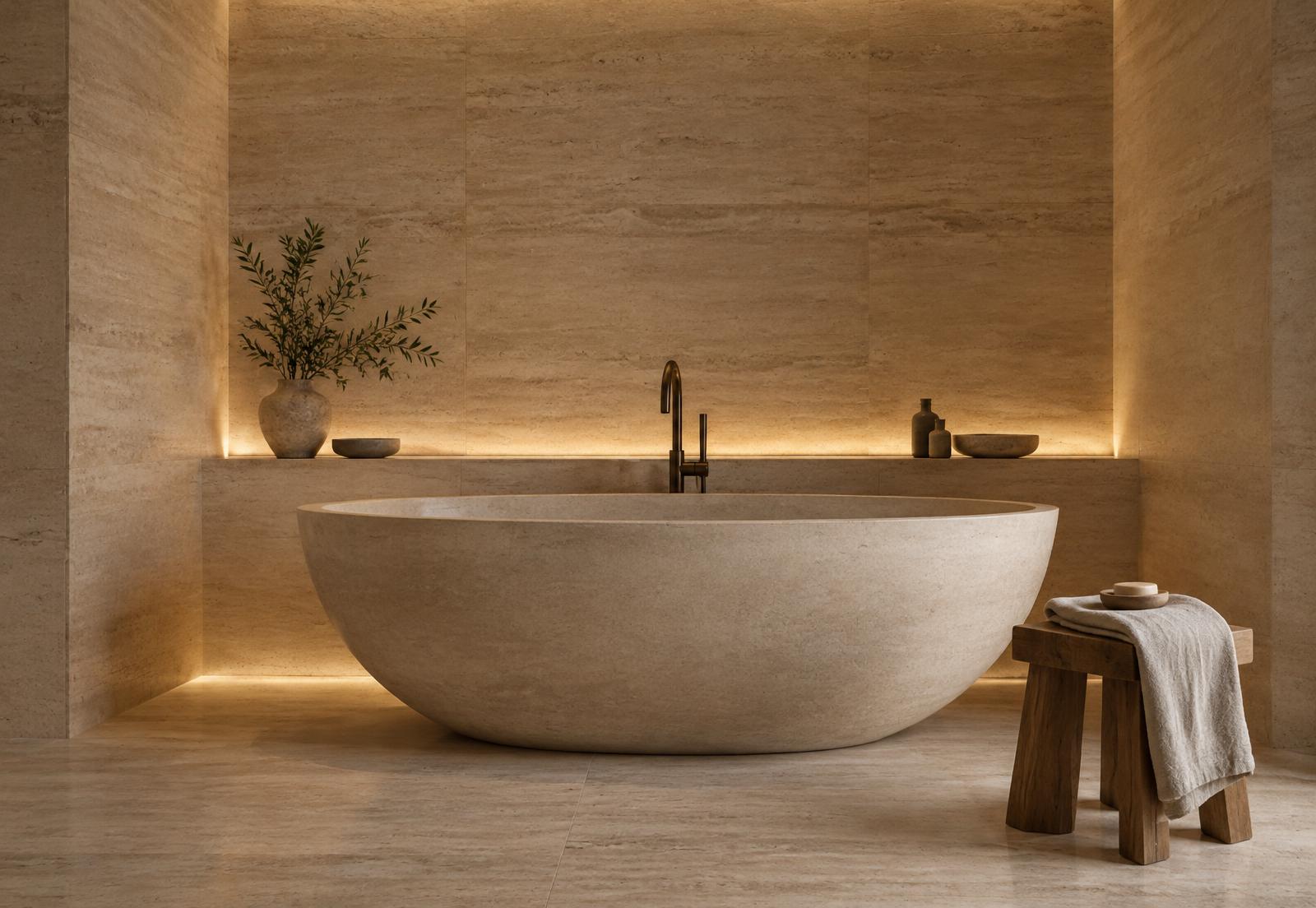
Bathrooms are increasingly being considered as spaces for personal retreat rather than purely functional environments.
A spa-inspired bathroom brings together materiality, light, proportion and carefully planned amenities to create an experience defined by comfort and restraint.
Natural stone, softly textured finishes and warm timber details can establish a sense of continuity with the wider residence.
Freestanding bathtubs, generously proportioned showers and integrated storage may introduce additional comfort where the available space and technical requirements permit.
Lighting plays a particularly important role.
Subtle illumination around mirrors, concealed details and carefully positioned low-level lighting can establish depth while maintaining the practical visibility required for daily routines.
The relationship between materials and lighting should be considered from the early stages of design, particularly where natural stone, wet-area construction and integrated fittings are involved.
Waterproofing, ventilation, accessibility and maintenance are essential considerations that should never be compromised for aesthetic reasons.
The result should be an environment that feels serene and purposeful, where architectural refinement enhances everyday routines.
The Importance of Acoustic Comfort
Sound is an often-overlooked aspect of residential interior design.
Hard architectural surfaces, generous ceiling heights and open-plan layouts can create visually impressive spaces, yet may also introduce unwanted sound reflections.
Wellness-focused design considers how these conditions influence the experience of each room.
Acoustic comfort can be supported through carefully selected materials, upholstered furnishings, curtains, rugs and suitable architectural treatments.
The planning of spaces is equally important.
Private bedrooms and quiet areas may benefit from separation from entertainment zones, kitchens and other frequently used environments.
In larger villas, circulation spaces and transitional areas can also help establish a more deliberate relationship between active and private zones.
The objective is not to eliminate sound entirely, but to create environments where acoustics feel appropriate to their intended function.
When integrated from the beginning of the design process, acoustic considerations can contribute to both practical comfort and architectural refinement.
Indoor Air Quality and Thermal Comfort
The quality of an interior environment depends on factors that are not always immediately visible.
Air quality, ventilation, humidity and temperature all contribute to how comfortable a home feels throughout the day.
In Dubai, these considerations are particularly important due to the region's climate and the significant role of air-conditioning in residential buildings.
A considered interior design approach should account for the interaction between architectural finishes, mechanical systems and the patterns of daily use.
Suitable ventilation, appropriate humidity management and regular maintenance of air-conditioning systems can help support a comfortable indoor environment.
Material specification is another consideration.
Where practical, selecting paints, adhesives, sealants and furnishings with independently verified low-emission performance can help reduce potential sources of indoor air pollutants.
Window treatments and appropriate solar shading can also contribute to managing glare and solar heat gain.
These decisions often require coordination between interior designers, architects and qualified building-services professionals.
Wellness-focused design is therefore not limited to aesthetic choices. It recognises the importance of the building's underlying performance in supporting comfortable everyday living.
Sensory Design: The Relationship Between Texture, Light and Space
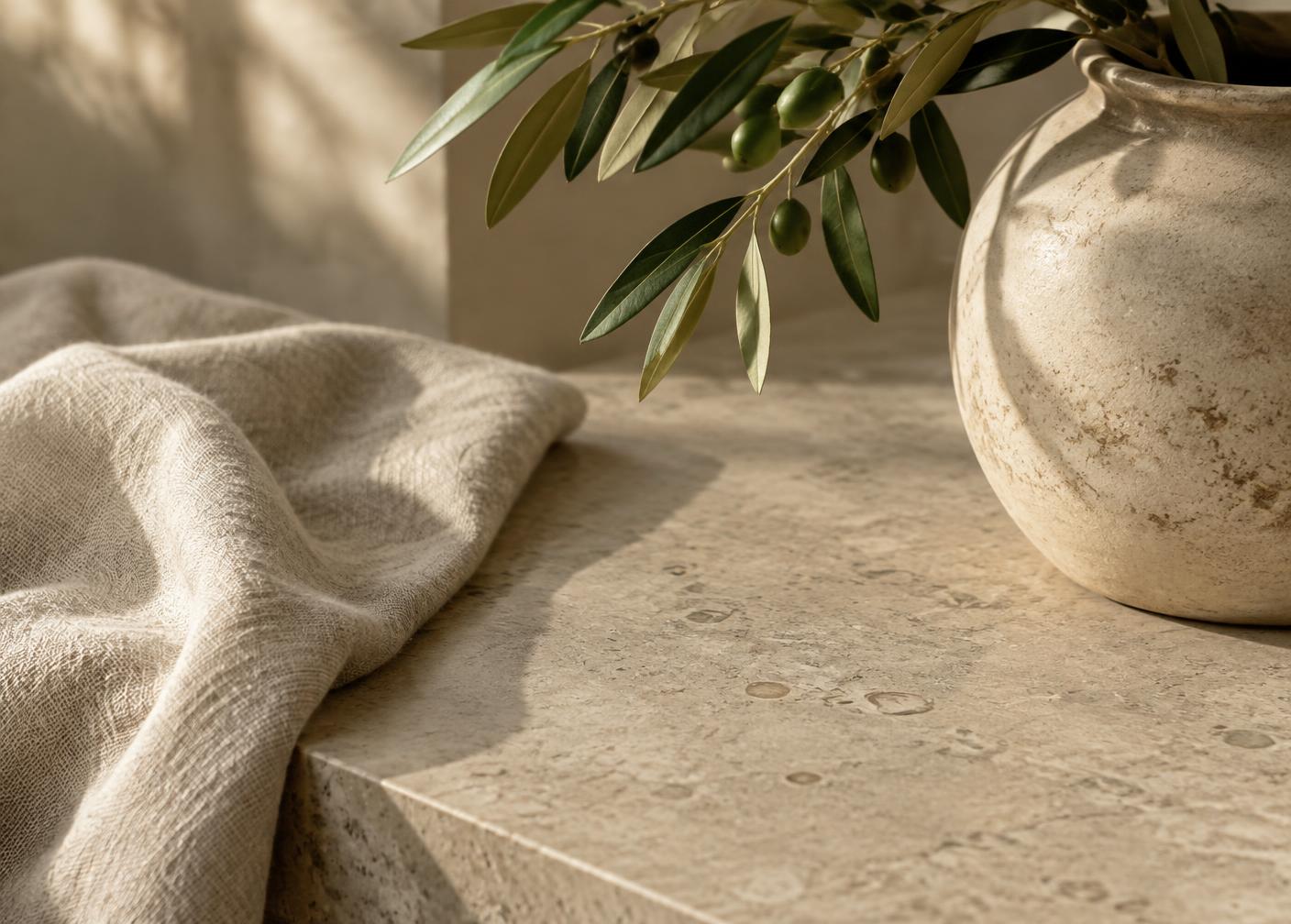
A restorative interior engages the senses through subtlety rather than excess.
The tactile qualities of natural materials, the softness of textiles and the gentle variation of daylight all contribute to the atmosphere of a room.
A honed limestone surface creates a different sensory impression from polished marble, just as natural linen introduces a different quality of softness from smooth leather.
These variations establish depth and character without requiring elaborate decoration.
The relationship between texture and lighting is particularly important.
Soft illumination can reveal the natural movement of stone, while directional lighting emphasises the grain of timber or the sculptural qualities of architectural finishes.
Colour also contributes to the wider composition.
Warm neutrals, muted earthy tones and carefully selected natural shades can establish visual continuity, allowing material qualities and architectural proportions to take precedence.
However, restorative design does not require every interior to be beige or minimal.
The most appropriate palette is one that responds to the architecture, the intended atmosphere and the personal preferences of its occupants.
At Earendel, this balance between materiality, atmosphere and individuality is central to creating spaces that feel refined without becoming impersonal.
Creating Dedicated Wellness Spaces at Home
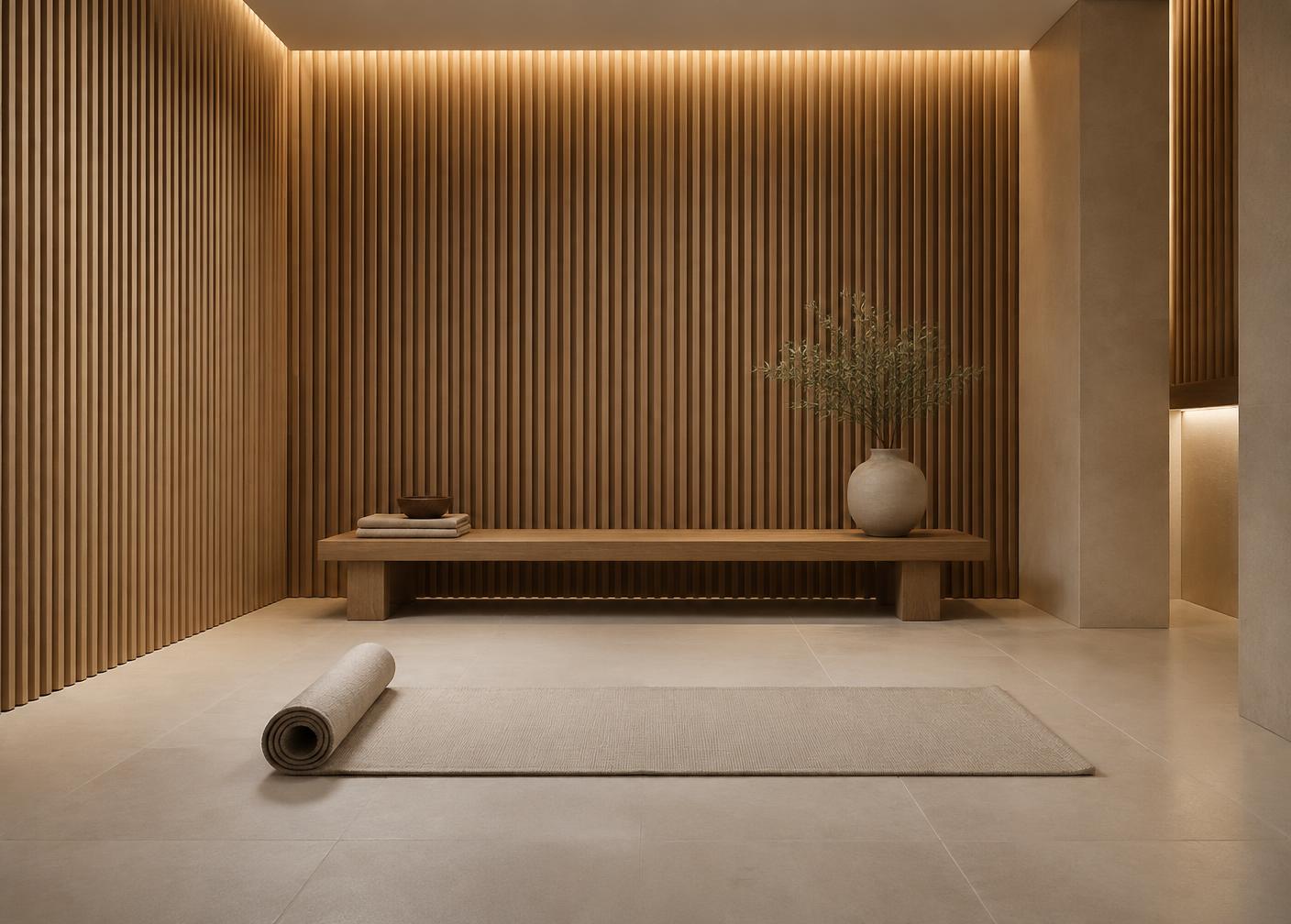
In larger residential properties, wellness-focused design may extend to rooms developed specifically for relaxation, movement or personal interests.
Private fitness studios, yoga spaces, meditation rooms and reading retreats can become meaningful additions to a residence when they respond to the homeowner's lifestyle.
These environments do not necessarily require elaborate facilities.
A quiet room with balanced daylight, appropriate flooring, discreet storage and carefully considered acoustics may provide a flexible setting for several activities.
Where more specialised facilities are introduced, such as steam rooms, saunas or plunge pools, technical planning becomes essential.
Ventilation, waterproofing, drainage, structural loading, electrical safety and ongoing maintenance must be evaluated with qualified specialists.
A successful wellness space should feel naturally integrated within the residence, sharing its architectural identity and material language rather than appearing as a separate commercial facility.
For properties with more limited space, the same philosophy can be applied through multifunctional rooms or intimate areas designed for reading, reflection or quiet activity.
The principle remains consistent: creating spaces that accommodate the way people choose to spend their time.
Smart Home Technology and Effortless Comfort
Technology can play a valuable role in supporting the experience of a wellness-focused home when integrated thoughtfully.
Lighting controls, automated window treatments and compatible climate-management systems allow residents to adjust their environment according to changing activities and preferences.
A carefully configured lighting scene may introduce brighter illumination during the day and softer, warmer light during the evening.
Automated shading can help manage sunlight and privacy, while appropriately designed climate systems support temperature control.
However, the most sophisticated technology is often the least visually intrusive.
Excessive controls, visible equipment and unnecessarily complicated interfaces can undermine the simplicity of the residential experience.
A considered approach prioritises intuitive operation, reliability and compatibility with the home's existing systems.
Technology should serve the architecture and the people who inhabit it, rather than become the defining feature of the space.
Wellness Interior Design in Dubai's Luxury Villas
Dubai's luxury residential architecture provides distinctive opportunities for creating homes centred on comfort, privacy and considered living.
Generous villas, landscaped outdoor areas and expansive interior volumes allow for a wide range of spatial experiences.
Private courtyards, wellness suites and carefully designed transitions between indoor and outdoor living can become integral aspects of the residential concept.
At the same time, the region's climate introduces practical considerations.
Solar exposure, thermal comfort, humidity, material durability and the performance of air-conditioning systems must be carefully evaluated.
For existing properties, a well-planned renovation can offer opportunities to improve spatial organisation, lighting flexibility, privacy and material suitability.
In new residential interiors, these principles can be incorporated from the earliest stages of design.
The objective should not be to recreate a resort environment within every home.
Rather, it is to create a residence that feels personally meaningful, architecturally coherent and responsive to the lifestyle of its occupants.
Designing for Longevity and Everyday Wellbeing
Wellness-focused interior design is most meaningful when its principles extend beyond temporary trends.
An interior that supports everyday comfort should also remain practical, adaptable and relevant over time.
Durable materials, intuitive layouts and carefully integrated architectural details contribute to this longevity.
Spaces that can respond to evolving family requirements may offer greater long-term value than highly specialised rooms developed around temporary preferences.
Similarly, thoughtful storage, comfortable furnishings and suitable lighting can continue to enhance the residential experience for many years.
The relationship between wellness and timeless design is therefore closely connected.
Both encourage a more deliberate approach to the built environment, placing quality, functionality and individual experience above unnecessary complexity.
A More Considered Way of Living
Wellness interior design reflects a broader understanding of what makes a residence exceptional.
Beyond architectural beauty, a home should provide comfort, support everyday routines and offer an environment that feels naturally connected to its occupants.
Through thoughtful space planning, natural materials, balanced lighting and an appreciation for sensory experience, interiors can become places of calm and lasting personal significance.
At Earendel Designs, we believe the most refined residential environments are those where architectural elegance and everyday comfort exist in harmony.
Our approach combines considered materiality, spatial understanding and attention to detail to create homes that feel both sophisticated and deeply personal.
Ultimately, restorative living is not defined by the number of wellness amenities a home contains.
It is found in the quality of its spaces, the intention behind its design and the quiet ease with which everyday life unfolds.
Discover Earendel Designs
Explore our approach to luxury residential interior design in Dubai, where thoughtful architecture, refined materials and individual lifestyles come together to create homes of enduring character.
---
Frequently Asked Questions
What is wellness interior design?
Wellness interior design is an approach that considers comfort, lighting, acoustics, air quality, material selection and everyday functionality alongside aesthetics. Its objective is to create interiors that respond thoughtfully to the needs and routines of their occupants.
How can biophilic design be incorporated into a luxury home?
Biophilic design can be introduced through natural daylight, views of landscaped surroundings, natural materials, indoor planting and carefully considered connections between interior and exterior spaces. The most effective solutions respond to the building's architecture and climate.
Does a wellness-focused home require a dedicated wellness room?
No. Wellness principles can be integrated throughout a residence. Comfortable bedrooms, effective lighting, suitable ventilation and quiet living spaces can all contribute to a more considered home environment without requiring a separate wellness facility.
What should be considered when designing a wellness-focused villa in Dubai?
Important considerations include solar exposure, thermal comfort, ventilation, humidity management, acoustic privacy, durable materials and lighting. The design should also reflect the residents' lifestyles and any existing architectural or building-services constraints.