

Light is among the most influential elements of interior design. It defines the way spaces are perceived, reveals the character of materials and establishes an atmosphere that extends beyond visual appearance.
A beautifully proportioned interior can take on an entirely different character depending on how it is illuminated. The gentle diffusion of natural daylight, the warmth of concealed architectural lighting and the subtle emphasis of a carefully positioned accent light each contribute to the overall spatial experience.
At Earendel Designs, we regard lighting as an integral part of the architectural and interior design process. Rather than treating illumination as a final decorative addition, we consider its relationship with space, materiality and function from the earliest stages of design.
Through a thoughtful balance of natural and artificial light, we seek to create environments that are visually refined, comfortable and responsive to the way they are inhabited.
Understanding the Importance of Lighting in Interior Design
Lighting is fundamental to the way an interior functions and feels.
Beyond providing visibility, it establishes visual hierarchy, influences spatial perception and contributes to the emotional character of a room.
Soft, indirect illumination can introduce warmth and intimacy, while brighter, more focused lighting supports activities that require precision and concentration.
The positioning, intensity and colour temperature of light all influence how architectural surfaces, furnishings and decorative elements are experienced.
A considered lighting scheme therefore requires more than selecting attractive fixtures.
It involves understanding the purpose of each space, the architectural composition and the relationship between different sources of illumination.
When these elements are approached collectively, lighting becomes part of the design language itself.
The Art of Layered Lighting
One of the defining principles of successful interior lighting design is layering.
Rather than relying on a single source of illumination, a layered approach combines different forms of lighting to establish depth, flexibility and visual balance.
Three fundamental layers typically form the foundation of a considered lighting scheme.
Ambient lighting provides the general illumination of a space. It may be achieved through recessed fixtures, concealed LED profiles, indirect lighting or decorative luminaires that distribute light throughout the interior.
Task lighting serves specific activities, such as reading, preparing food or working. Integrated desk lights, bedside fixtures and carefully positioned kitchen lighting contribute to both comfort and functionality.
Accent lighting introduces visual emphasis, drawing attention to architectural details, artwork, textured surfaces or sculptural furnishings.
The relationship between these layers allows a space to adapt to different activities and moments throughout the day.
A living room, for example, may require balanced general illumination during social gatherings, softer lighting for evening relaxation and selective accent lighting to highlight architectural features.
At Earendel, we believe the most successful lighting schemes are those that offer flexibility without compromising visual clarity.
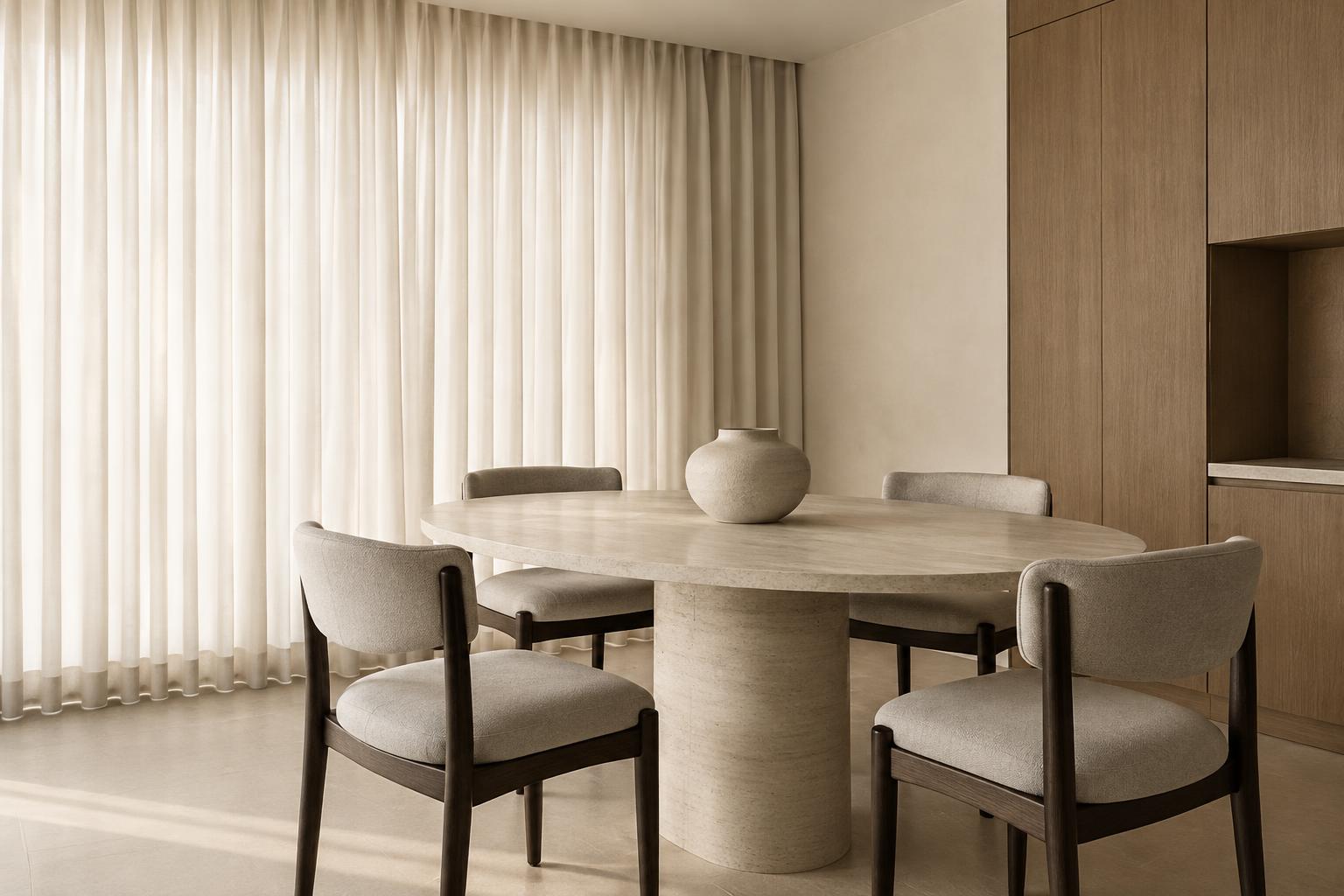
Natural Light as an Architectural Element
Natural light plays a defining role in shaping the character of interior spaces.
Its changing intensity, direction and colour throughout the day introduce subtle variations in atmosphere, revealing different qualities of materials and architectural forms.
Generous glazing can establish a sense of openness and strengthen the visual connection between interior and exterior environments.
However, effective daylight design requires an understanding of more than window size.
Building orientation, solar exposure, interior finishes and appropriate shading all influence how daylight is experienced.
In Dubai, where strong sunlight and high temperatures are important architectural considerations, the balance between natural illumination and thermal comfort is particularly significant.
Sheer curtains, carefully selected window treatments and suitable glazing solutions can help manage glare and privacy while preserving the benefits of daylight.
A thoughtfully designed interior responds to these conditions, allowing natural light to enrich the space without compromising everyday comfort.
The Relationship Between Light and Materiality
Light and material are inseparable components of interior design.
Every surface responds differently to illumination, depending on its colour, texture, reflectivity and composition.
The subtle variations of natural limestone become more pronounced under directional lighting, while softly illuminated timber introduces warmth and depth.
Honed stone diffuses light differently from polished marble, and textured plaster can produce delicate shadows that reveal its tactile qualities.
These interactions can transform seemingly simple materials into expressive architectural elements.
For this reason, lighting decisions should be developed alongside material selections rather than independently.
At Earendel, we consider how illumination reveals the inherent character of finishes, allowing materiality and light to complement one another in a cohesive architectural composition.
Creating Atmosphere Through Colour Temperature
The colour temperature of artificial lighting has a substantial influence on the atmosphere of an interior.
Measured in Kelvin, it describes whether a light source appears warm, neutral or cool.
Warm lighting, typically around 2700K to 3000K, produces a softer appearance often associated with residential comfort and relaxation.
Neutral lighting, commonly around 3500K to 4000K, can provide a balanced environment for areas requiring greater visual clarity, depending on the task and surrounding conditions.
Cooler lighting may be appropriate in certain functional settings, although it is generally used more selectively in luxury residential interiors.
The objective is not to apply a single colour temperature throughout every room, but to establish a coherent lighting language that responds to the intended experience of each space.
Colour rendering is equally important.
Light sources with appropriate colour-rendering performance allow materials, fabrics and finishes to appear more faithful to their intended colours.
Careful attention to these technical characteristics ensures that lighting supports the integrity of the interior design.
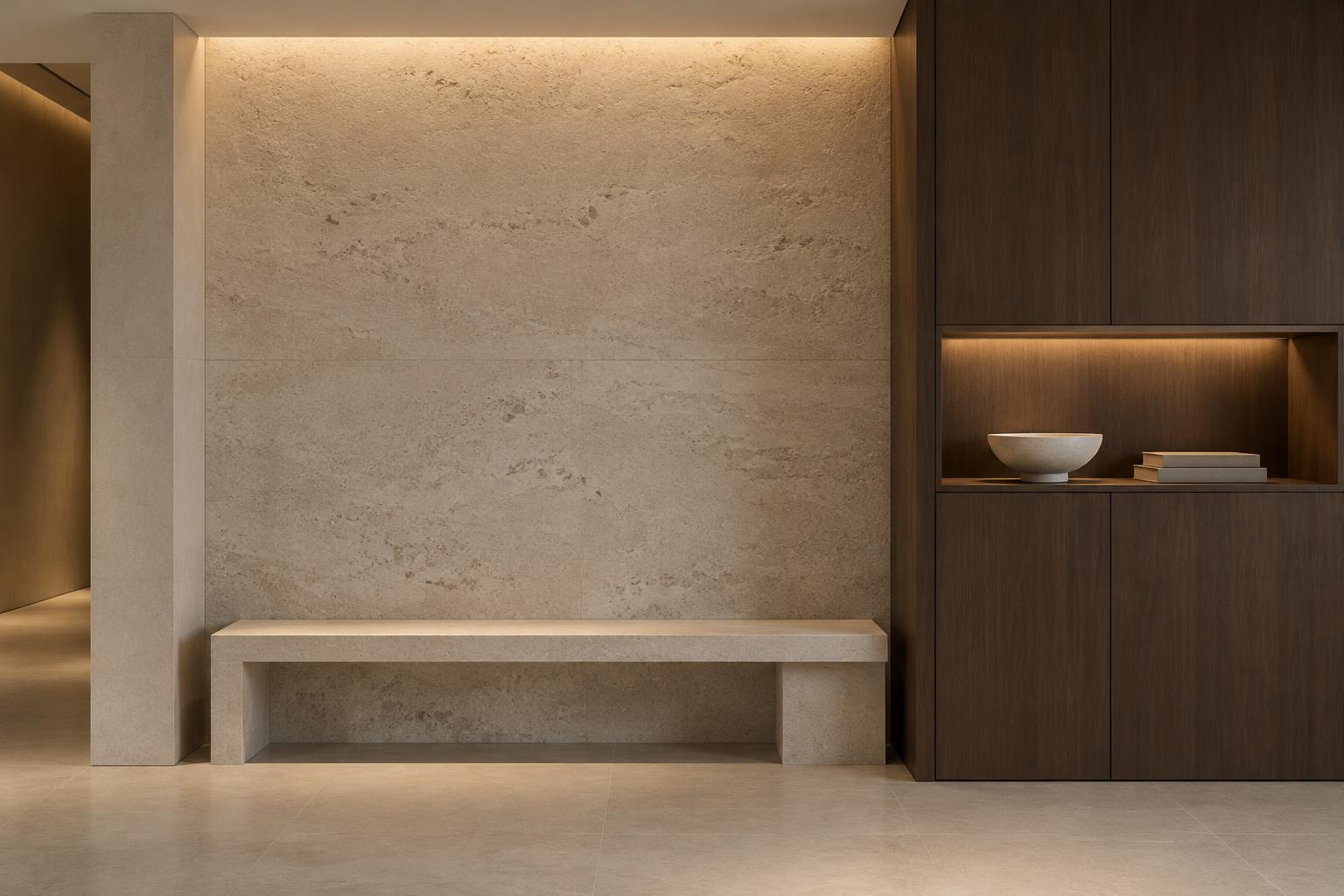
Architectural Lighting and the Beauty of Restraint
In refined contemporary interiors, the most effective lighting is often the least visually intrusive.
Concealed profiles, integrated joinery lighting and discreet recessed fixtures can illuminate architectural elements without drawing unnecessary attention to the light source itself.
This approach allows the architecture to remain the primary focus.
A softly illuminated ceiling recess may emphasise the proportions of a room, while a carefully positioned wall washer can reveal the texture of natural stone or plaster.
Integrated lighting within shelving or cabinetry can create visual depth while maintaining a clean and uninterrupted composition.
The success of these details depends on precision.
Fixture placement, beam angles, glare control and integration with architectural surfaces must be carefully considered to achieve a balanced result.
At Earendel, we favour lighting solutions that feel naturally connected to the design, where technical performance and aesthetic restraint work together.
Smart Lighting and Contemporary Living
Advances in lighting technology have introduced greater flexibility in the way interior environments are controlled and experienced.
Smart lighting systems allow users to adjust illumination levels, manage individual lighting zones and establish predefined scenes for different activities.
A single living space may transition from bright, functional lighting during the day to a warmer, more intimate atmosphere in the evening.
Integrated control systems can also coordinate lighting with motorised window treatments and other compatible home technologies.
Beyond convenience, appropriately configured occupancy sensors, dimming controls and automated schedules can support more efficient energy use.
However, technology should enhance the experience of a space rather than complicate it.
The most successful integrations provide intuitive control while remaining discreet within the wider architectural environment.
For Earendel, smart lighting represents an opportunity to combine contemporary functionality with the elegance and simplicity of considered interior design.
Lighting for Different Residential Spaces
Every interior environment has its own functional and atmospheric requirements.
A carefully developed lighting strategy responds to these differences while maintaining continuity throughout the home.
Living Areas
Living spaces benefit from flexible, layered illumination that accommodates relaxation, conversation and entertainment. A combination of concealed architectural lighting, decorative fixtures and selected accents creates depth without excessive brightness.
Bedrooms
Bedroom lighting should prioritise comfort and adaptability. Warm, dimmable illumination, discreet bedside reading lights and subtle integrated details can establish a calm environment suited to rest.
Kitchens and Dining Areas
Kitchens require practical task illumination, particularly across preparation surfaces. Dining spaces often benefit from softer, more intimate lighting that enhances the experience of gathering and conversation.
Bathrooms
Bathroom lighting should balance functionality with atmosphere. Carefully positioned illumination around mirrors supports everyday routines, while softer ambient lighting can introduce a sense of calm and refinement.
By responding to the purpose of each environment, lighting becomes an essential part of how a home supports daily life.
Energy Efficiency and Responsible Lighting Design
A considered lighting scheme should balance aesthetic quality with long-term operational efficiency.
Modern LED technology offers flexibility in fixture design, colour temperature and dimming while generally consuming significantly less energy than traditional incandescent lighting.
Its relatively long service life can also help reduce the frequency of replacement.
Appropriate lighting controls further support efficiency by ensuring that illumination is provided where and when it is needed.
Daylight-responsive systems, occupancy sensors and carefully planned lighting zones can help reduce unnecessary energy consumption when correctly specified and commissioned.
In luxury residential interiors, these solutions can be integrated without compromising architectural refinement.
The objective is to create environments that are beautiful, practical and considered in their long-term performance.
A Timeless Approach to Lighting Design
Lighting should respond to the architectural identity of an interior rather than simply reflect temporary design trends.
While decorative luminaires can introduce sculptural character, their selection should complement the proportions, materials and broader visual language of the space.
Timeless lighting design is defined by balance, restraint and functionality.
It considers how an environment will be experienced over time, how lighting requirements may evolve and how individual elements can remain relevant as furnishings and personal preferences change.
A thoughtfully designed scheme provides both visual continuity and everyday adaptability.
At Earendel, we believe that exceptional lighting should enhance the architecture without overwhelming it, revealing the qualities of a space through subtlety and precision.
Illuminating Spaces with Intention
The role of lighting in interior design extends far beyond illumination.
It shapes atmosphere, enhances materiality, supports functionality and influences how spaces are experienced throughout the day.
From the natural movement of daylight to the precision of integrated architectural lighting, every source contributes to the wider composition.
At Earendel Designs, we approach lighting as an essential element of considered design — carefully balancing technical performance, spatial understanding and aesthetic refinement.
Our objective is to create interiors where light and architecture exist in harmony, revealing the beauty of materials and enriching the everyday experience of a space.
Discover Earendel Designs
Explore our approach to luxury residential interior design in Dubai, where architectural lighting, refined materials and considered detailing come together to create spaces of enduring elegance.