
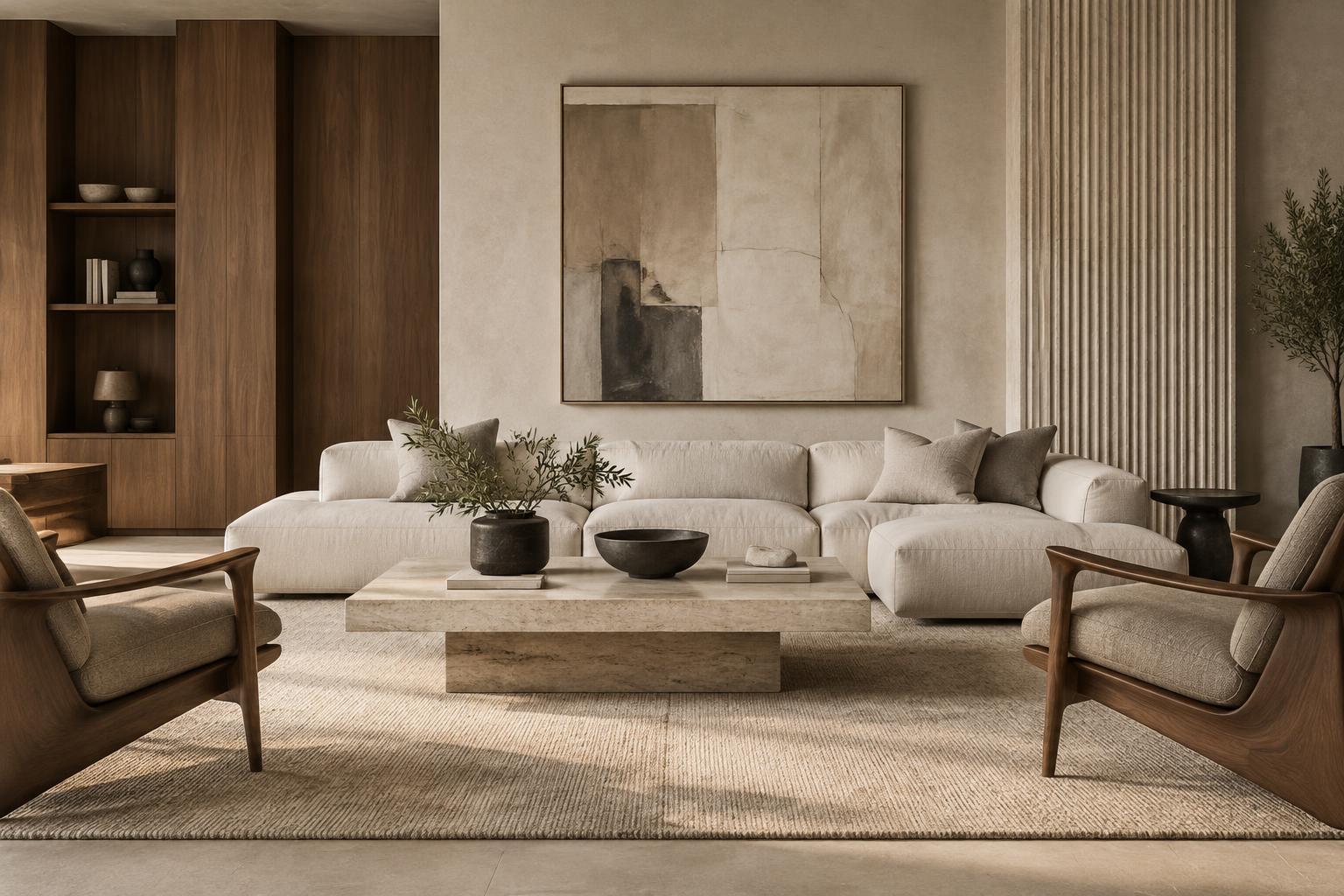
The living room is more than a space for gathering. It is often the heart of a home — a place where architecture, personal expression and everyday life come together.
In contemporary residential design, the most compelling interiors are no longer defined by decoration alone. Instead, they embrace a quieter interpretation of luxury, where carefully considered proportions, natural materials and thoughtful furnishings establish an atmosphere of comfort and understated elegance.
Modern living room design is ultimately an exercise in balance. The relationship between light and shadow, texture and form, openness and intimacy determines how a space feels as much as how it appears.
A beautifully proportioned sofa, a sculptural stone table or a softly illuminated architectural wall can contribute more to an interior than an abundance of decorative elements.
At Earendel Designs, we believe that exceptional spaces are shaped by intention. Every detail should contribute to the overall composition, creating interiors that feel natural, personal and enduring.
Whether designing a contemporary apartment or a luxury villa, these 15 modern living room ideas offer inspiration for creating a space that is both architecturally refined and genuinely comfortable.
1. Begin with the Architecture of the Space
Before considering individual furnishings, it is essential to understand the architectural qualities of the living room.
The proportions of the space, the placement of windows, the relationship between adjoining rooms and the availability of natural light all influence the direction of the design.
A generously proportioned living room may benefit from distinct seating arrangements that establish intimacy within an open environment. A smaller space, by contrast, may require a more restrained furniture composition that preserves circulation and visual openness.
Consider the natural focal points of the room. A garden view, architectural fireplace or beautifully detailed wall may provide a stronger foundation for the furniture arrangement than the position of a television.
The most successful layouts respond to these existing characteristics rather than imposing a predetermined furniture arrangement.
Thoughtful space planning creates a sense of harmony, allowing architecture and furnishings to complement one another.
2. Choose Furniture with Considered Proportions
One of the most influential decisions in modern living room design is selecting furniture that responds appropriately to the scale of the space.
A beautifully crafted sofa can feel overwhelming when its proportions are too generous, just as an undersized seating arrangement may appear disconnected within a large room.
Scale should always be considered in relation to the surrounding architecture.
In spacious residential interiors, generously proportioned sofas and lounge chairs can establish a sense of comfort while defining distinct gathering areas.
For more compact living rooms, furniture with slimmer profiles, carefully selected dimensions and a sense of visual lightness can create a more balanced composition.
It is equally important to consider the relationship between individual pieces.
Sofas, armchairs, coffee tables and side tables should feel connected rather than arranged as isolated objects.
When proportions are carefully resolved, a living room achieves an effortless sense of order — one in which every element appears naturally placed.
3. Embrace the Warmth of Neutral Colour Palettes
Neutral colours remain an enduring foundation of luxury contemporary interiors.
However, the most sophisticated living rooms rely on more than a simple combination of white and beige.
A carefully developed palette introduces subtle variations in tone, warmth and materiality, allowing the interior to feel layered rather than uniform.
Soft ivory, limestone, warm taupe, muted sand and gentle earthy shades can establish a sense of continuity throughout the space.
These colours work particularly well when combined with natural timber, stone and tactile upholstery.
Deeper tones may be introduced selectively to create contrast. Chocolate brown, muted olive and charcoal can provide definition without compromising the overall restraint of the room.
The key is to consider colour in relation to natural and artificial light.
A material that appears cool in a showroom may take on a considerably warmer character within a sunlit residence.
For this reason, colour and material samples should be evaluated within the actual architectural setting whenever possible.
4. Introduce Natural Stone and Warm Timber
Natural materials bring a sense of authenticity and permanence to contemporary living rooms.
Stone and timber are particularly effective because of their inherent variation, tactile qualities and ability to complement restrained architectural compositions.
Travertine, limestone and marble can establish a refined foundation through flooring, feature walls, tables and architectural detailing.
Timber introduces warmth, whether expressed through natural oak flooring, walnut joinery or carefully selected furniture.
The relationship between these materials is especially important.
A honed stone surface may create a sense of solidity, while timber provides organic detail and visual softness.
When used together, they establish a balanced material language that feels both contemporary and enduring.
Rather than introducing numerous finishes, focus on a limited selection of materials with complementary undertones.
This approach allows the natural character of each surface to become more visible and meaningful.
5. Create Architectural Interest Through Texture
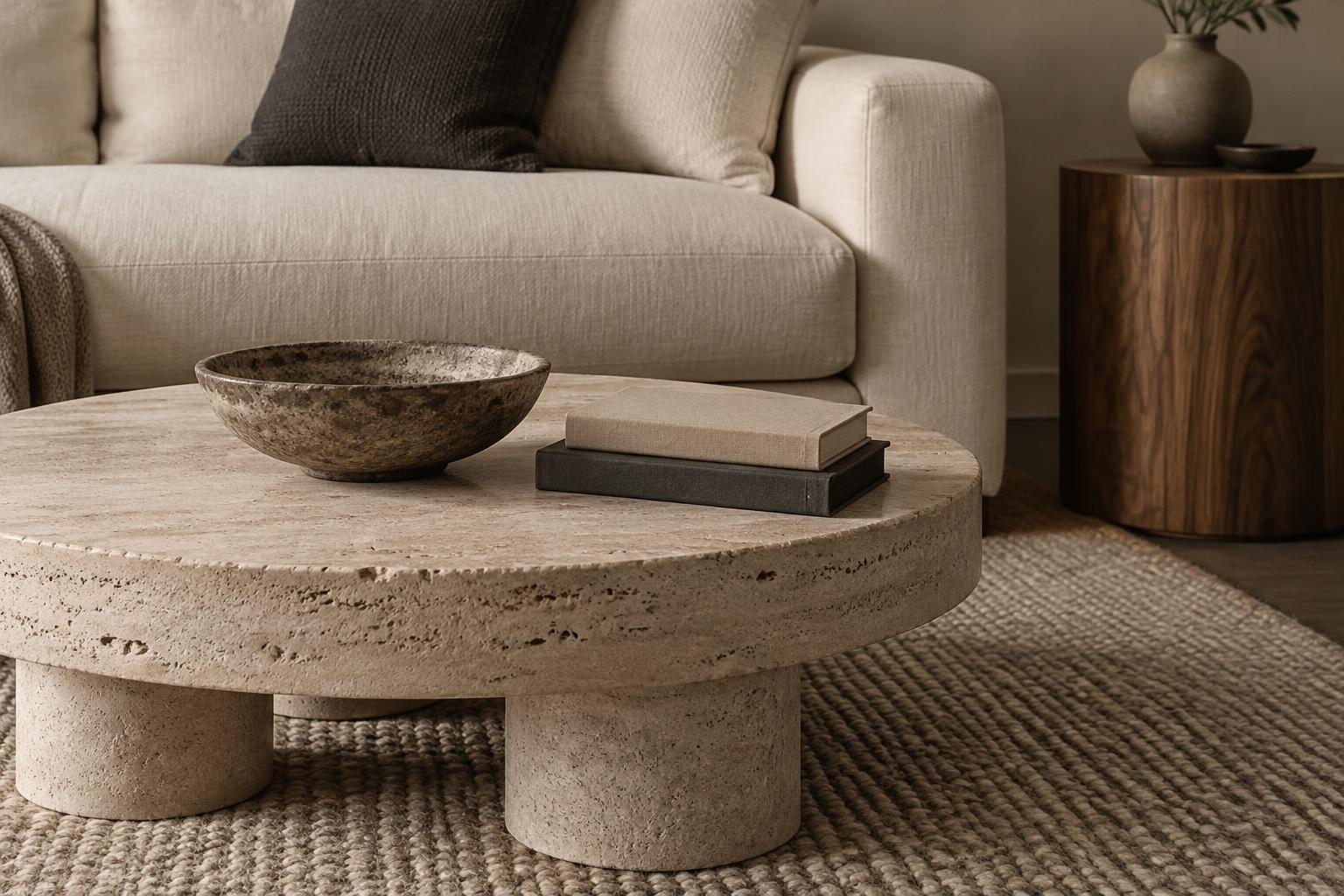
Texture is one of the most effective ways to introduce character into a modern living room without relying on elaborate ornamentation.
A restrained palette can become remarkably expressive through subtle differences in surface, finish and material composition.
Fluted marble, textured plaster, brushed timber and woven textiles each respond differently to light, creating a layered visual experience.
Within Earendel Designs' Sidra 1 Villa in Dubai Hills Estate, hand-carved fluted marble wall finishes introduce architectural depth while preserving the neutral character of the residence.
The carefully detailed herringbone flooring establishes a complementary sense of rhythm, allowing the surfaces to contribute to a unified composition.
This approach demonstrates how materiality can become the defining feature of an interior.
When texture is considered as part of the architectural design rather than a decorative addition, even the simplest spaces can achieve remarkable richness.
6. Introduce Sculptural Furniture with Restraint
Sculptural furniture can give a contemporary living room a distinctive identity.
Curved sofas, softly contoured armchairs and organically shaped tables introduce movement, balancing the structured lines of modern architecture.
However, sculptural design is most effective when used selectively.
A single expressive furniture piece can establish a strong visual focal point, particularly when surrounded by furnishings with simpler forms.
Consider a curved upholstered sofa positioned alongside a linear stone coffee table, or a sculptural lounge chair placed against a clean architectural wall.
These contrasts create visual interest while maintaining harmony.
Comfort should remain central to the selection process.
A beautifully shaped chair must also respond to the practical expectations of everyday living.
The objective is to bring together form, comfort and craftsmanship, allowing individual furnishings to contribute to the overall architectural character of the room.
7. Make the Coffee Table a Considered Centrepiece
The coffee table occupies a central position within most living rooms and can play a defining role in the furniture composition.
Beyond its practical function, it offers an opportunity to introduce a distinctive material, shape or handcrafted detail.
A low travertine table may complement natural stone finishes throughout the interior, while a richly toned timber piece can provide contrast against neutral upholstery.
Sculptural forms can bring visual movement, particularly when paired with more structured seating.
Proportion is essential.
A coffee table should feel appropriately scaled to the sofa and surrounding chairs while allowing comfortable movement.
As a starting point, approximately 40–45 centimetres between a sofa and coffee table can provide comfortable access in many arrangements, although this should be adjusted to suit the furniture and occupants.
Decorative styling should also be approached with restraint.
A carefully selected vessel, a small collection of books or a meaningful sculptural object may be sufficient to complete the composition.
8. Use Rugs to Establish Warmth and Spatial Definition
A thoughtfully selected rug can transform the way a living room feels.
It introduces softness, supports acoustic comfort and creates a visual relationship between the individual pieces of furniture.
In large residential interiors, rugs are particularly valuable for defining seating arrangements within open-plan spaces.
A generously proportioned rug can help establish a sense of intimacy, making an expansive room feel more welcoming.
One common mistake is selecting a rug that is too small for the furniture composition.
Where appropriate, allowing at least the front legs of the principal seating pieces to rest on the rug can create a more unified arrangement.
Natural wool, textured weaves and carefully selected blended materials offer different tactile and practical qualities.
The most suitable choice depends on the intended use of the room, maintenance expectations and the wider material palette.
A restrained rug can contribute remarkable depth when its texture and proportions are carefully considered.
9. Create Atmosphere Through Layered Lighting
Lighting is essential to the architectural and emotional character of a living room.
It influences how materials are perceived, establishes visual hierarchy and allows the space to adapt throughout the day.
A successful lighting scheme generally combines ambient, task and accent illumination.
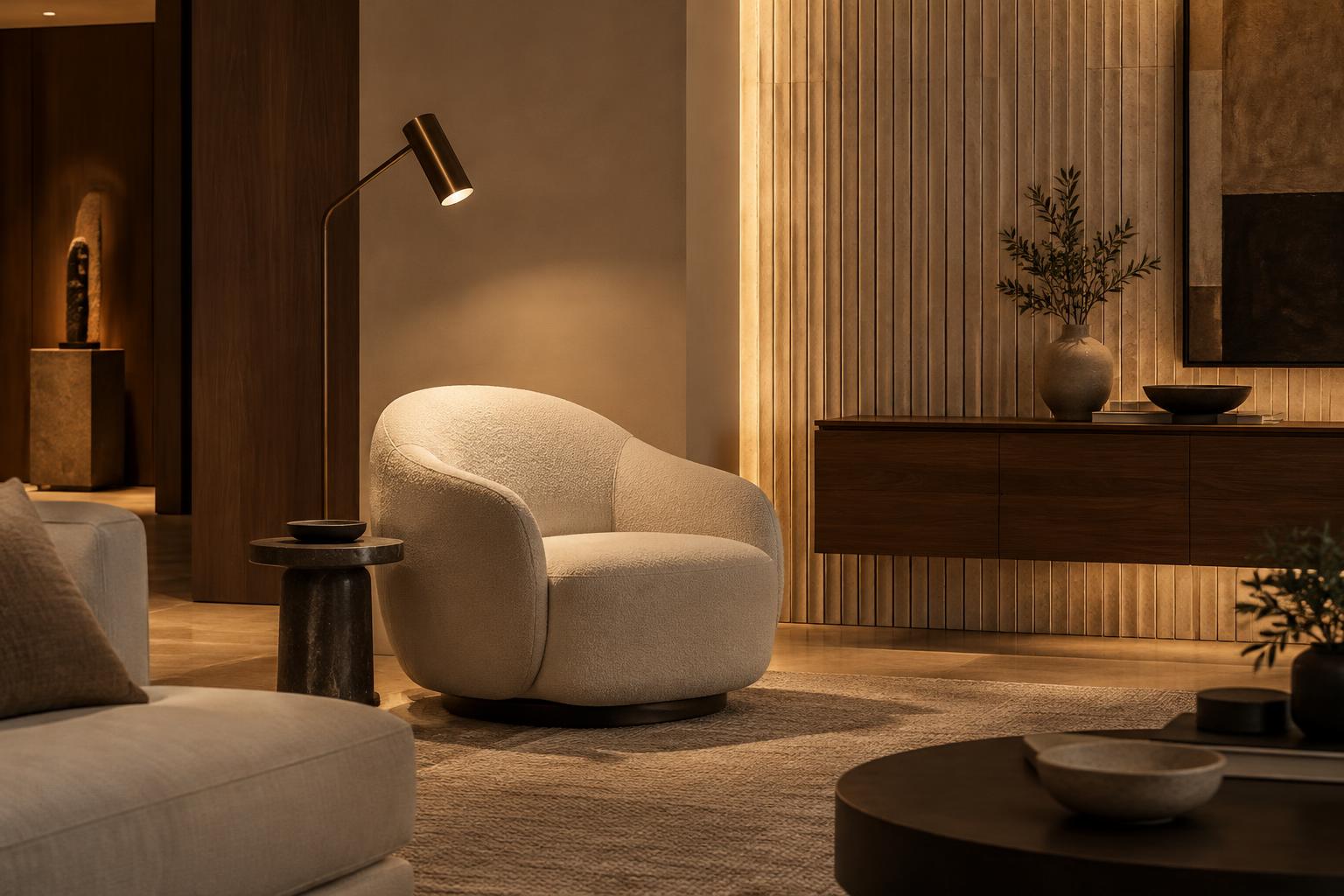
Concealed architectural lighting can introduce warmth without interrupting the visual clarity of the room.
Table lamps and sculptural floor lights provide a more intimate form of illumination, while carefully positioned accent lighting can reveal artwork, textured walls and architectural detailing.
The relationship between light and materiality is particularly important.
A directional light may emphasise the sculptural quality of fluted stone, while softer illumination can enhance the warmth of natural timber.
In many residential interiors, warm white light around 2700K to 3000K provides a comfortable atmosphere, although the appropriate specification depends on the space and its intended use.
Dimming and carefully arranged lighting circuits allow the room to transition from bright daytime functionality to a more intimate evening setting.
The result should feel effortless, with illumination enhancing the architecture rather than competing with it.
10. Allow Natural Light to Shape the Interior
Natural light is one of the most expressive elements in contemporary residential architecture.
Its changing direction and intensity reveal subtle variations in material, texture and colour throughout the day.
In living rooms with generous glazing, the relationship between daylight and interior finishes can become a defining part of the design.
Natural stone may reveal warmer undertones in direct sunlight, while textured walls cast gentle shadows that add architectural depth.
Window treatments should be considered alongside these characteristics.
Full-height curtains can soften expansive glass surfaces, introduce visual height and provide greater control over privacy and illumination.
Sheer fabrics allow daylight to enter while creating a more diffused atmosphere, while lined or heavier curtains may offer additional privacy and glare control.
In Dubai, solar exposure and thermal comfort require particular consideration.
A successful design balances the benefits of natural light with appropriate shading and material selection, ensuring the living room remains comfortable as well as visually refined.
11. Integrate Bespoke Joinery and Concealed Storage
A well-designed living room should support everyday routines without compromising its architectural clarity.
Bespoke joinery provides opportunities to integrate practical functions directly into the interior.
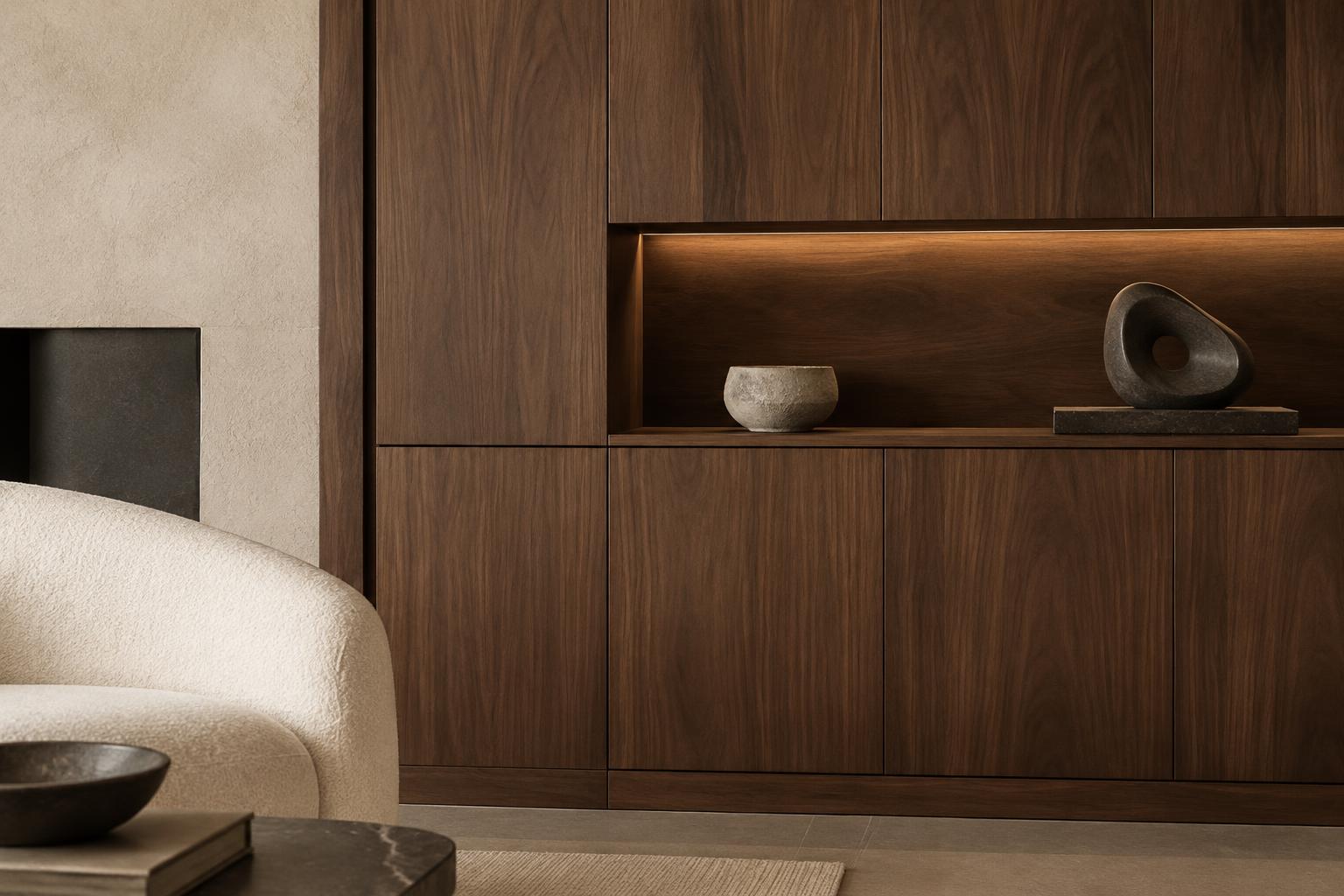
Custom cabinetry, recessed shelving and carefully detailed media units can establish visual continuity while accommodating storage, technology and decorative objects.
Rather than introducing freestanding storage throughout the room, a carefully composed joinery installation can become part of the architectural design.
Material and proportion are central to its success.
Timber panelling may create warmth, while natural stone or subtly textured finishes provide a refined contrast.
Concealed lighting can reveal the depth of open shelving, allowing carefully selected objects to become part of the overall composition.
For smaller living rooms, integrated storage can be particularly beneficial, reducing visual clutter while preserving usable floor space.
The most successful joinery feels inseparable from the architecture — practical in its function and restrained in its appearance.
12. Curate Artwork and Decorative Objects with Intention
A refined living room should feel personal rather than overly arranged.
Artwork, collected objects and carefully selected decorative elements allow the identity of the homeowner to emerge within the architectural composition.
A large-scale artwork may establish a focal point against a restrained wall, while smaller pieces can introduce character through more intimate arrangements.
Decorative objects should be selected with consideration for proportion, texture and material.
A handcrafted ceramic piece, sculptural bronze object or carefully chosen collection of books may bring individuality to a shelving composition.
However, restraint remains important.
An abundance of objects can diminish the visual significance of individual pieces.
Allowing space between decorative elements gives each object room to be appreciated.
In Earendel Designs' Jumeirah Bay Island Mansion project, artwork and decorative objects were curated as part of the furnishing and styling process, creating a cohesive relationship between the existing architecture, materials and interior details.
The objective is not simply to decorate a room, but to introduce a sense of personality and belonging.
13. Consider Flooring as Part of the Architecture
Flooring provides the visual foundation upon which the rest of the living room is composed.
Its colour, texture and pattern influence the perceived proportions and character of the space.
Large-format natural stone can establish a sense of continuity, particularly within open-plan interiors.
Timber flooring introduces warmth and organic variation, while patterns such as herringbone can create a more pronounced architectural rhythm.
The scale of the flooring pattern should be considered in relation to the room.
A detailed arrangement may add character to a generous living space, while a simpler installation may support a more minimal aesthetic.
Practical considerations are equally important.
Durability, maintenance, acoustic performance and compatibility with existing construction should inform the final selection.
When flooring is considered alongside wall finishes, joinery and furnishings, the result is a more coherent interior.
A thoughtfully selected floor should complement the architecture without requiring excessive attention.
14. Strengthen the Connection Between Indoor and Outdoor Living
One of the most compelling characteristics of contemporary luxury homes is the relationship between interior spaces and their surrounding environments.
Living rooms that open toward gardens, courtyards or waterfront views can establish a greater sense of openness and spatial continuity.
In Dubai's luxury villas, this relationship often plays an important role in the architectural composition.
Furniture placement should respond to the setting.
Rather than obstructing expansive views with oversized furnishings, carefully arranged seating can preserve sightlines and allow the exterior to become part of the interior experience.
Material continuity can further strengthen this relationship.
A related palette of natural stone, timber and neutral finishes may establish visual harmony between the living room and the adjoining terrace.
Window treatments, shading and thermal performance should also be considered to maintain comfort.
The objective is not simply to bring the outdoors inside, but to create a natural relationship between architecture, landscape and everyday living.
15. Invest in Timeless Design Rather Than Temporary Trends
The most enduring living rooms are not defined by a particular season or design movement.
They are established through thoughtful proportions, high-quality materials and furnishings that remain relevant beyond changing trends.
A well-crafted sofa, carefully selected natural stone finish or beautifully detailed joinery installation can provide long-term value through its comfort, functionality and lasting character.
This does not require the elimination of contemporary influences.
Instead, it encourages a distinction between foundational design decisions and decorative elements that can evolve over time.
Architectural finishes, flooring and bespoke cabinetry may benefit from a more timeless approach, while artwork, textiles and smaller furnishings can introduce changing expressions of personal style.
At Earendel Designs, we believe lasting luxury is found in the relationship between craftsmanship, restraint and individuality.
An exceptional living room should feel as appropriate to the lives of its occupants as it does to the architecture that surrounds them.
Modern Living Room Ideas for Smaller Spaces
While luxury residential interiors are often associated with generous proportions, the principles of thoughtful design are equally relevant to compact living rooms.
In a smaller apartment, the objective is to create visual openness while preserving comfort and practical functionality.
Appropriately scaled sofas, slender furniture profiles and integrated storage can help maintain a balanced composition.
A consistent material palette may establish continuity, while carefully positioned lighting can introduce depth without relying on additional decorative elements.
Furniture with multiple functions can also be valuable.
A thoughtfully proportioned ottoman may provide occasional seating, while a custom media unit can incorporate concealed storage without occupying unnecessary floor space.
The most important principle is to avoid introducing more furniture than the room comfortably accommodates.
A restrained arrangement with carefully selected pieces often creates a stronger sense of space than an overcrowded composition.
Luxury Living Room Design in Dubai Villas and Apartments
Residential architecture in Dubai presents a distinctive range of design opportunities.
Expansive villas in communities such as Dubai Hills Estate often provide generous living spaces, substantial glazing and strong relationships with landscaped surroundings.
These environments benefit from carefully considered furniture proportions, architectural lighting and cohesive material palettes that bring comfort to larger volumes.
Contemporary apartments may require greater emphasis on spatial efficiency, integrated storage and the relationship between adjoining functions.
In either setting, the most successful interiors respond to the architecture and the individual lifestyle of the homeowner.
For renovation projects, existing finishes, electrical provisions, lighting arrangements and structural conditions should be assessed before new design elements are introduced.
For furnishing and styling projects, the objective is to complement the established architectural character through carefully selected furniture, lighting and decorative objects.
These distinctions are important because every residence requires an approach appropriate to its existing conditions and intended transformation.
How to Create a Living Room That Feels Truly Luxurious
Luxury interior design is not defined solely by expensive furnishings, elaborate finishes or large architectural spaces.
It is expressed through the quality of decisions that shape the environment.
A well-proportioned room, thoughtfully selected materials, comfortable seating and carefully layered lighting can establish a greater sense of refinement than an excessive number of statement pieces.
The strongest interiors allow the architecture to remain visible while creating spaces that feel welcoming and personal.
Materiality introduces depth. Lighting creates atmosphere. Furnishings establish comfort, while carefully curated details give the interior its individual character.
When these elements are considered together, the result is a space that feels naturally composed rather than artificially styled.
At Earendel Designs, our approach to luxury residential interiors is grounded in architectural understanding, thoughtful material selection and an appreciation for craftsmanship.
We believe the most exceptional living rooms are those that reflect the people who inhabit them — interiors that balance elegance with comfort and remain meaningful through the years.
Discover our approach to luxury residential interior design in Dubai, where considered proportions, refined materials and carefully composed details come together to create homes of lasting character.
Frequently Asked Questions
What are the best modern living room ideas?
The most effective modern living room ideas combine thoughtful furniture layouts, natural materials, layered lighting and a cohesive colour palette. Sculptural seating, bespoke storage, textured wall finishes and carefully selected artwork can introduce further character while maintaining a refined contemporary aesthetic.
How can I make my living room look modern and luxurious?
Begin with appropriate furniture proportions and a clear layout. Select a restrained palette of complementary materials, introduce layered lighting and choose a limited number of distinctive furnishings. Quality, craftsmanship and visual harmony generally contribute more to a luxurious atmosphere than excessive decoration.
What colours are best for a modern living room?
Warm white, ivory, beige, taupe and earthy neutrals provide versatile foundations for contemporary living rooms. Deeper tones such as walnut brown, charcoal and muted green can be introduced to create contrast. The final selection should respond to the natural light, architecture and personal preferences of the homeowner.
How do you design a modern living room in a small apartment?
Prioritise efficient space planning, appropriately scaled furniture and integrated storage. Maintain comfortable circulation, use a cohesive material palette and avoid excessive decorative objects. Thoughtful lighting and carefully selected furnishings can make compact interiors feel more open and composed.
How should furniture be arranged in a large living room?
Large living rooms benefit from clearly defined seating areas that respond to the architecture and intended activities. Generous sofas, complementary lounge chairs and appropriately sized rugs can create comfortable gathering spaces while preserving circulation and views.
What materials are commonly used in luxury living room design?
Natural stone, timber, quality upholstery, carefully selected metals and textured wall finishes are frequently used in luxury residential interiors. Their suitability depends on the desired aesthetic, maintenance requirements and the practical expectations of the space.
Is bespoke furniture worth considering for a living room?
Bespoke furniture can be valuable when standard dimensions, materials or designs do not respond adequately to the space. Custom joinery, made-to-measure upholstery and individually specified furniture can improve proportion, functionality and visual continuity, provided they are well designed and appropriately constructed.
How much does luxury living room interior design cost in Dubai?
The cost depends on the size of the space, scope of work, furniture specifications, materials and whether renovation or custom joinery is required. A furnishing and styling project will typically have different cost considerations from a complete interior renovation. A detailed, project-specific quotation provides the most reliable basis for budgeting.