
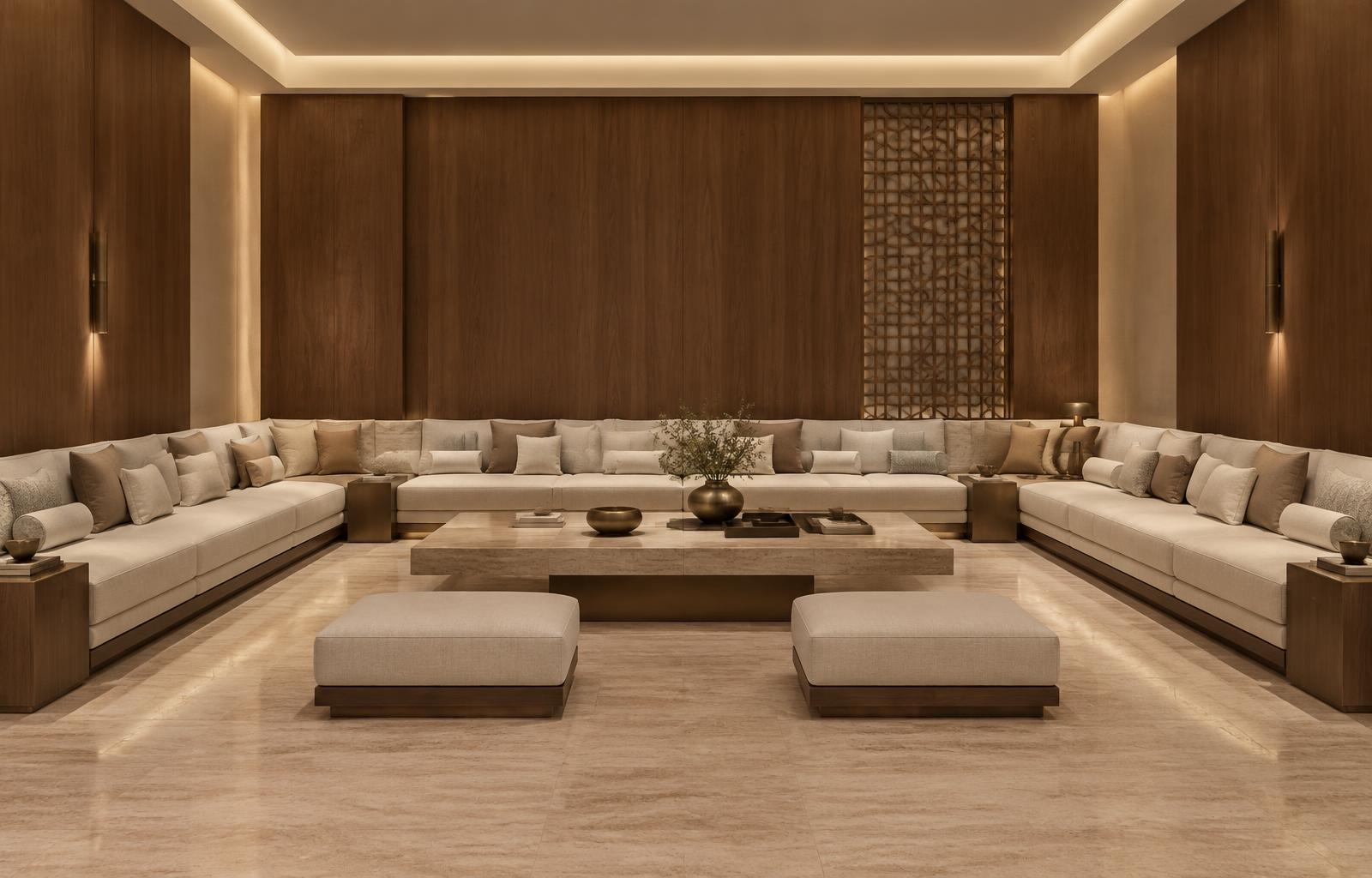
The majlis has long occupied a meaningful place in homes throughout the Arabian Gulf. More than a reception room, it is an expression of hospitality, a setting for conversation and a space where family traditions and social connections are preserved.
In contemporary residential architecture, the majlis is being reinterpreted through a more restrained design language. Ornamental detailing gives way to carefully considered proportions, natural materials and bespoke furnishings, while the essential principles of welcome, generosity and gathering remain unchanged.
The result is a modern majlis that feels both culturally connected and architecturally refined.
For luxury villas in Dubai, Abu Dhabi and across the GCC, this approach offers an opportunity to create reception spaces that celebrate regional heritage while embracing contemporary comfort.
At Earendel Designs, we believe exceptional interiors emerge from an understanding of the people who inhabit them. Through thoughtful space planning, refined materiality and carefully composed details, tradition and modern living can coexist naturally within a single architectural environment.
These twelve modern majlis design ideas explore how to create an elegant, functional and enduring space that honours the significance of hospitality in Gulf homes.
What Is Modern Majlis Design?
A majlis is traditionally a place for receiving guests, gathering with family and engaging in conversation. Its significance extends beyond its physical arrangement, reflecting the importance of hospitality and community within Gulf societies.
Recognised by UNESCO as an element of intangible cultural heritage, the majlis continues to play a meaningful role across the United Arab Emirates, Saudi Arabia, Qatar and Oman.
Modern majlis design preserves these cultural foundations while responding to contemporary architecture, lifestyles and expectations of comfort.
Rather than relying on elaborate ornamentation, contemporary interpretations may incorporate clean architectural lines, tailored upholstery, integrated lighting and carefully selected natural materials.
The distinction lies in the relationship between form and purpose.
A beautifully designed majlis should accommodate conversation naturally, provide comfort for guests and reflect the identity of the household.
Its aesthetic expression may be traditional, contemporary or somewhere between the two. What makes it successful is the thought invested in creating a welcoming and functional environment.
1. Begin with a Layout Designed for Hospitality
The foundation of a successful modern majlis lies in its spatial organisation.
Unlike a conventional living room, which may be arranged around a television or central decorative feature, the majlis is primarily shaped by the act of gathering.
The arrangement of seating should encourage conversation and allow guests to engage comfortably with one another.
Depending on the proportions of the room, a U-shaped, L-shaped or perimeter seating arrangement may provide an appropriate foundation.
Generous villas may accommodate several interconnected seating groups, while more intimate spaces may benefit from a carefully considered arrangement that maintains visual openness.
Circulation is equally important.
Guests should be able to enter, move between seating areas and access refreshments without unnecessary interruptions.
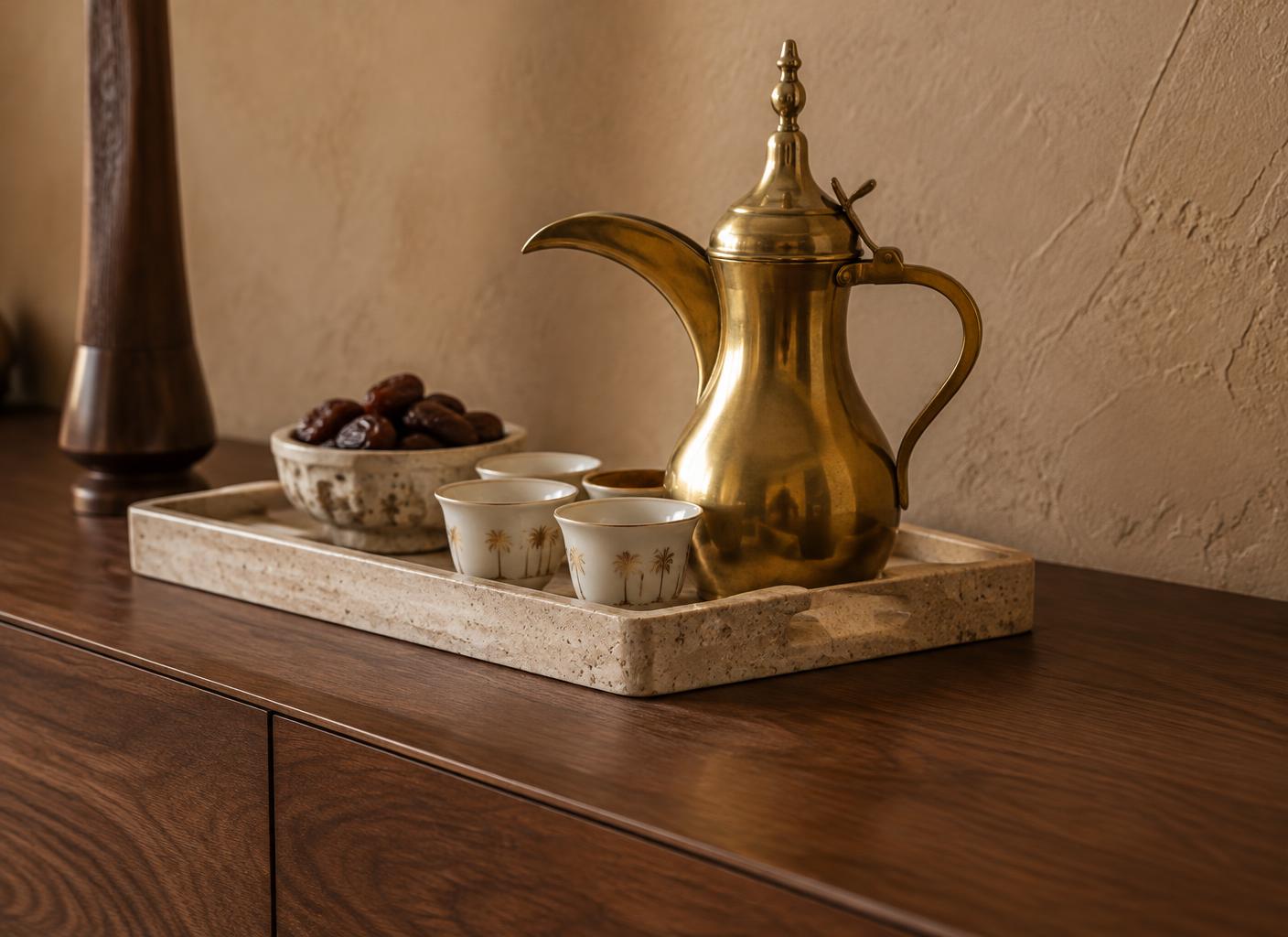
The design should also consider the practical requirements of serving Arabic coffee, tea and refreshments.
A thoughtful layout establishes a sense of ease, allowing hospitality to unfold naturally within the architectural space.
2. Introduce Contemporary Arabic Seating
Seating is among the most defining elements of majlis interior design.
Traditional arrangements have often favoured continuous seating along the perimeter of a room, creating a shared environment oriented toward conversation.
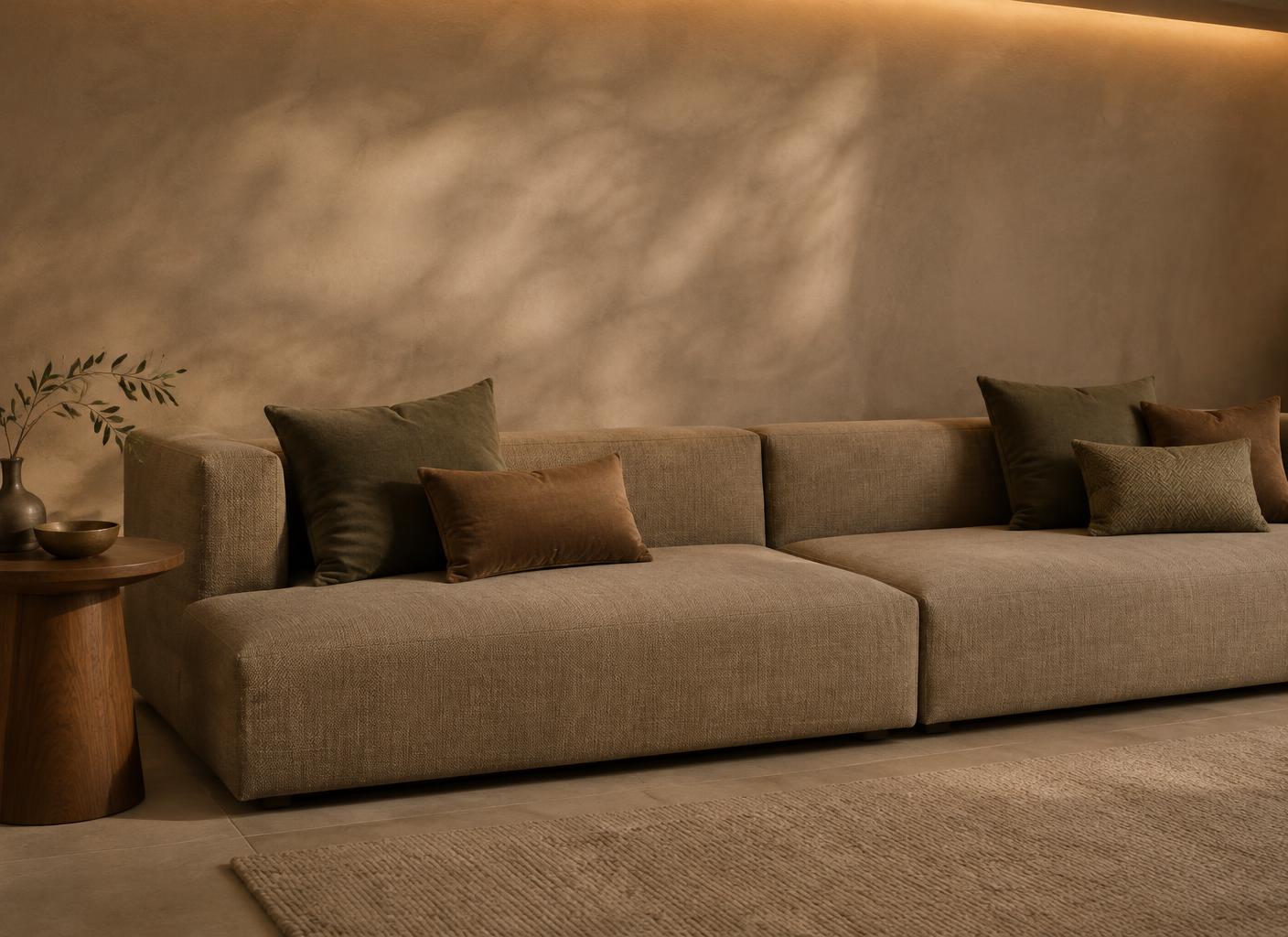
Contemporary interpretations retain the social advantages of these arrangements while introducing more refined proportions, tailored upholstery and flexible furniture compositions.
Bespoke sofas can be designed to suit the dimensions of the room, creating a cohesive architectural relationship between the seating and surrounding finishes.
Rather than selecting overly elaborate furniture, consider pieces defined by their comfort, craftsmanship and restrained silhouettes.
Generously proportioned upholstery in linen blends, textured fabrics or carefully selected performance materials can establish warmth while maintaining a sophisticated appearance.
The appropriate seating height and depth should respond to the preferences of the household and its guests.
Although low seating can contribute to a relaxed contemporary aesthetic, excessively low or deep furniture may not be comfortable for everyone.
The objective is to create a welcoming arrangement that respects both cultural preferences and everyday practicality.
3. Create a Refined Palette Inspired by the Region
Colour plays an important role in establishing the atmosphere of a modern Arabic majlis.
Rather than relying exclusively on pronounced decorative colours, contemporary luxury interiors increasingly explore restrained palettes inspired by natural landscapes and architectural materials.
Warm ivory, limestone, sand, taupe and muted earth tones provide a versatile foundation.
These shades complement natural stone, timber and textured upholstery while creating a sense of visual continuity.
Deeper colours may be introduced selectively.
Walnut brown, olive green, bronze and rich burgundy can establish moments of contrast without overwhelming the architectural composition.
The relationship between colour and light should be considered carefully.
In Dubai and other Gulf cities, strong natural sunlight can significantly influence the appearance of materials throughout the day.
A warm neutral palette can feel luminous in daylight and more intimate under carefully controlled evening lighting.
The most successful colour schemes allow individual materials to express their natural character while maintaining a harmonious overall atmosphere.
4. Embrace Natural Stone and Warm Timber
Materiality offers an opportunity to introduce depth and permanence into a contemporary majlis.
Natural stone and timber are particularly effective because of their inherent variation, tactile qualities and relationship with architectural light.
Travertine, limestone and marble can establish a refined foundation through flooring, feature walls and carefully selected furniture.
Warm timber, meanwhile, introduces softness and organic character.
Oak, walnut and other appropriately specified wood finishes can be incorporated through wall panelling, bespoke joinery and architectural screens.
The contrast between these materials creates visual interest without requiring extensive ornamentation.
A honed stone floor paired with warm timber detailing and softly upholstered seating can establish an environment that feels sophisticated yet welcoming.
Surface finishes should be selected according to their intended use, durability and maintenance requirements.
In a majlis intended for frequent gatherings, practical considerations are essential to ensuring that the selected materials remain appropriate over time.
The objective is a composition in which material quality and architectural restraint become expressions of luxury.
5. Reinterpret Traditional Arabic Details with Restraint
The relationship between heritage and contemporary design is one of the most compelling aspects of modern majlis interiors.
Traditional architectural elements can introduce cultural identity when interpreted with sensitivity and an understanding of their original significance.
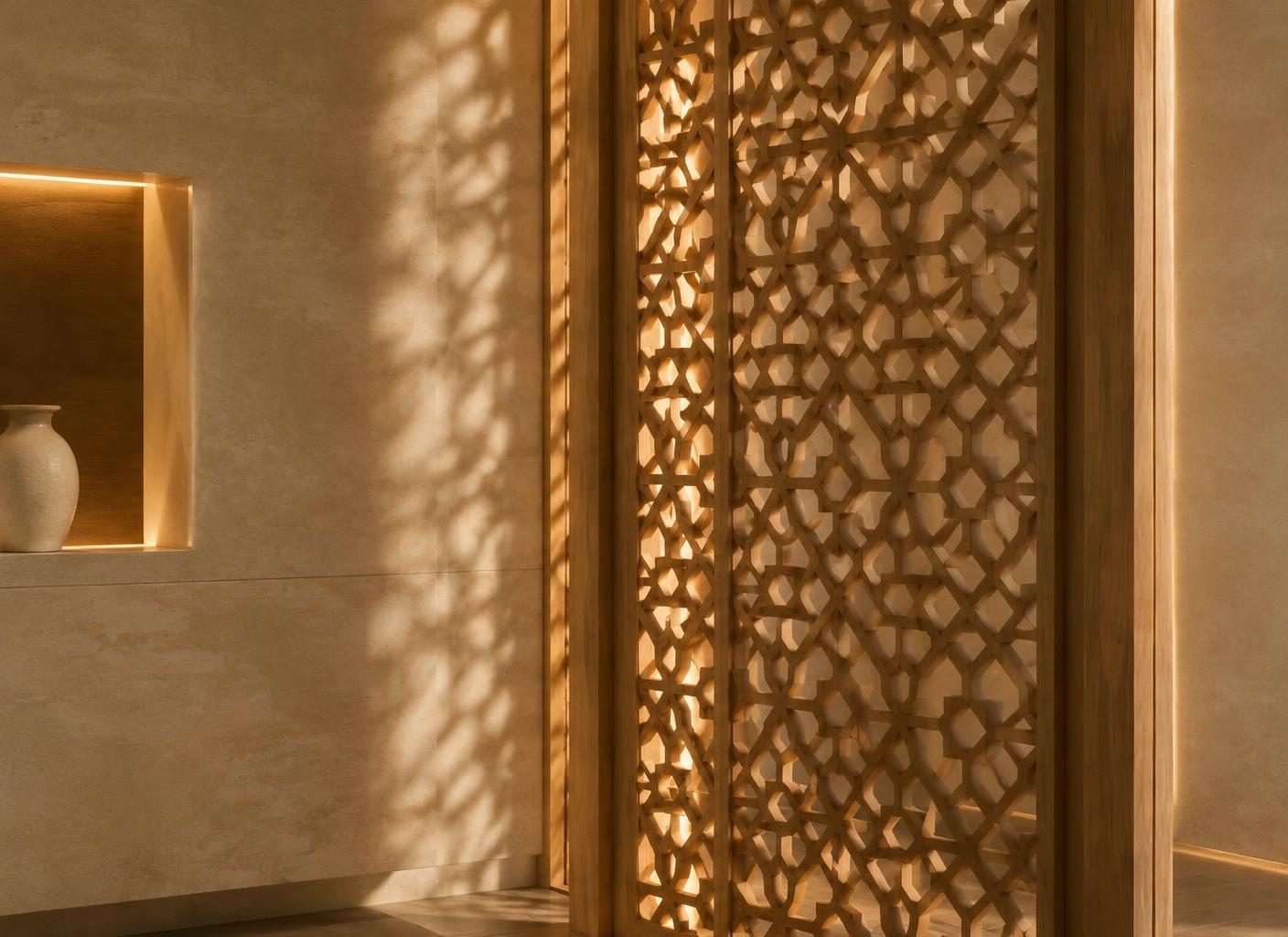
Geometric patterns, mashrabiya-inspired screens, carved timber and selected metalwork details may provide opportunities to reference regional architecture.
However, successful integration depends on restraint.
Rather than introducing ornamental patterns across every surface, a single carefully executed architectural feature may create a more meaningful impression.
A timber screen with a contemporary geometric interpretation can provide subtle separation between spaces.
A thoughtfully detailed wall panel may establish visual character without competing with the surrounding furnishings.
Traditional craftsmanship can also be expressed through carefully selected textiles, ceramics and decorative objects.
The objective is not to reproduce a historical interior, but to establish a respectful dialogue between heritage and contemporary architectural expression.
Regional traditions vary between communities and households, making personal and cultural relevance more important than following a predetermined decorative formula.
6. Consider the Relationship Between Privacy and Openness
Privacy is an essential consideration in many residential majlis designs throughout the GCC.
Depending on the household''s preferences, the majlis may function as a distinct reception area, separate from the more private family living spaces.
In some villas, a dedicated entrance allows guests to access the majlis without passing through the main residential areas.
Other homes incorporate the majlis within the principal architecture, using transitional spaces, screens or carefully considered circulation to establish a sense of separation.
There is no universal arrangement.
The appropriate solution depends on the property, cultural practices, family preferences and intended use.
For contemporary villas, the objective is to provide privacy without compromising architectural continuity.
Timber screens, discreet doors and thoughtful spatial planning can create natural transitions between formal hospitality areas and private living environments.
Materials and architectural details may remain consistent throughout the home, allowing the majlis to retain its distinctive function while feeling connected to the wider residence.
When approached carefully, privacy becomes an integrated architectural quality rather than a restrictive planning requirement.
7. Use Architectural Lighting to Establish Atmosphere
Lighting is central to the character of a modern luxury majlis.
It influences the perception of materials, defines architectural features and contributes to the atmosphere experienced by guests.
A considered lighting scheme should accommodate both practical illumination and more intimate evening gatherings.
Concealed architectural lighting can establish a soft foundation, while selected decorative luminaires introduce sculptural character.
Integrated lighting within wall details or bespoke joinery can create depth and subtle visual interest.
Rather than relying exclusively on a large central chandelier, a layered approach allows illumination to be distributed more evenly throughout the space.
This can be particularly valuable in rooms with generous proportions or multiple seating arrangements.
Warm lighting often complements natural stone, timber and neutral upholstery, although the appropriate colour temperature should be selected in relation to the materials and intended atmosphere.
Dimming controls provide additional flexibility, allowing the majlis to accommodate different occasions without altering its architectural character.
The most successful lighting feels naturally connected to the design, revealing the quality of the interior through subtlety rather than excess.
8. Integrate Bespoke Joinery and Hospitality Details
A thoughtfully designed majlis should support the rituals of hospitality without becoming visually cluttered.
Bespoke joinery can introduce practical functionality while contributing to the architectural composition.
Integrated cabinets may provide storage for serving accessories, decorative objects and items used during gatherings.
Display niches can accommodate carefully curated ceramics, artwork or objects of personal significance.
For households that frequently entertain, it may be appropriate to create a discreet serving area connected to the majlis.
Depending on the available space, this may include storage, preparation surfaces and suitable provisions for coffee and tea service.
Such elements should be planned around the actual requirements of the household rather than included solely for appearance.
The relationship between joinery, lighting and surrounding materials is equally important.
Warm timber cabinetry, subtle bronze detailing and carefully integrated illumination can introduce architectural depth while maintaining a restrained aesthetic.
The objective is to make hospitality feel effortless, allowing practical functions to sit naturally within the design.
9. Introduce Texture Through Fabrics and Rugs
Textiles play an essential role in balancing the architectural qualities of a majlis.
Stone, timber and carefully detailed wall finishes establish structure, while upholstery and rugs introduce softness, warmth and acoustic comfort.
The selection of fabrics should consider both visual character and practical performance.
Textured upholstery can create subtle variation within a neutral palette, while carefully selected cushions introduce an additional layer of comfort.
A generously proportioned rug may help unify the seating arrangement and establish a central sense of gathering.
Traditional weaving and textile craftsmanship can also offer meaningful opportunities to incorporate cultural references.
Al Sadu-inspired textiles, for example, may introduce distinctive patterns associated with regional weaving traditions when used authentically and respectfully.
Rather than introducing numerous competing patterns, a more restrained approach allows selected textiles to provide character within a cohesive material palette.
The most successful compositions balance tactile richness with visual clarity.
10. Consider Acoustics and Everyday Comfort
Acoustic comfort is particularly important in a space designed around conversation.
Large majlis rooms may feature expansive stone surfaces, high ceilings and generous architectural proportions.
Although these elements can create a striking visual environment, they may also increase sound reflections.
A thoughtful interior design approach should consider how the space will perform during gatherings of different sizes.
Upholstered seating, rugs, curtains and appropriate wall treatments can help soften the acoustic character of the room.
For more demanding environments, specialised acoustic solutions may be incorporated discreetly within architectural finishes.
Comfort extends beyond acoustics.
Seating proportions, indoor temperature, ventilation and lighting should all respond to the practical experience of guests.
A successful majlis should accommodate extended conversations and gatherings without sacrificing comfort.
When these considerations are integrated from the beginning, functionality becomes part of the architectural refinement of the space.
11. Design for Different Generations and Occasions
A modern majlis often serves a household across different generations and occasions.
Its design should therefore respond to a variety of social requirements.
A formal reception may call for a more composed seating arrangement, while smaller family gatherings may benefit from a relaxed and intimate atmosphere.
Flexible furniture arrangements can help accommodate these different situations.
Moveable occasional chairs, appropriately scaled tables and adaptable seating compositions may provide greater versatility.
The needs of older family members should also be considered.
Comfortable seat heights, supportive upholstery and clear circulation can make the room more accessible without compromising its design.
Technology may be integrated where relevant, including discreet audio systems and intuitive lighting controls.
However, it should remain secondary to the primary purpose of the space: facilitating hospitality and conversation.
The most successful majlis interiors offer flexibility without losing their distinctive identity.
12. Invest in Timeless Design and Craftsmanship
A luxury majlis should remain relevant beyond changing interior design trends.
Its lasting character is established through thoughtful proportions, durable materials and furniture selected for comfort and quality.
Architectural finishes such as stone, timber and bespoke joinery form the foundation of the space.
These elements benefit from a considered approach that prioritises longevity and material integrity.
Decorative objects, cushions and smaller furnishings may evolve over time, allowing the room to respond to changing preferences without requiring substantial renovation.
Timelessness does not require the absence of cultural detail.
Instead, it encourages a more meaningful relationship between heritage, personal expression and contemporary living.
A beautifully crafted timber screen, carefully selected rug or individually designed seating composition can become an enduring part of the interior.
At Earendel Designs, we believe that exceptional spaces are defined by the thought behind each decision.
Luxury is expressed through proportion, craftsmanship and the confidence to allow carefully selected elements to speak for themselves.
Modern Majlis Design for Smaller Homes and Apartments
Although majlis interiors are often associated with expansive villas, their principles can also be adapted to more compact residences.
The foundation remains the same: creating a comfortable environment for conversation and hospitality.
In a smaller home, an L-shaped seating arrangement may establish a clear gathering area without occupying excessive floor space.
Bespoke furniture can be particularly valuable where standard dimensions do not respond adequately to the architecture.
Integrated storage helps maintain visual clarity, while lighter colour palettes and carefully considered lighting can contribute to a more open atmosphere.
The relationship between the majlis and adjoining rooms should also be planned thoughtfully.
Where a dedicated reception room is not possible, a multipurpose living area may incorporate elements of traditional majlis hospitality through its seating arrangement and furniture selection.
The objective is to preserve the spirit of gathering while adapting the design to contemporary spatial requirements.
Planning a Modern Majlis Renovation in Dubai
For existing villas, a modern majlis renovation can provide an opportunity to improve both the visual character and functionality of the reception space.
The process should begin with an assessment of the existing architecture, including room proportions, circulation, natural light and building-services provisions.
The intended seating arrangement should be established before selecting architectural finishes.
This allows electrical outlets, lighting locations and bespoke joinery to be coordinated with the furniture composition.
Material selections should respond to the existing property and the wider design language of the home.
Where substantial changes are proposed, structural conditions, ventilation, electrical requirements and applicable community or authority approvals should be assessed by qualified professionals.
The final design should also account for the practical requirements of hospitality, including serving areas, storage and guest circulation.
Rather than focusing solely on decorative transformation, the most successful renovation creates an environment that feels coherent, comfortable and relevant to the way the household entertains.
Contemporary Majlis Design Across the GCC
Although shared principles of hospitality connect majlis traditions across the Gulf, residential customs and architectural preferences vary between countries, communities and individual households.
In the UAE, a contemporary majlis may form part of a luxury villa with a separate guest entrance or a carefully planned relationship with the main family residence.
In Saudi Arabia, Qatar, Oman, Bahrain and Kuwait, individual interpretations similarly respond to local traditions, family arrangements and the architecture of the home.
These differences should not be reduced to a single decorative style.
The most considered approach begins with understanding the cultural context and preferences of the occupants.
A contemporary material palette, bespoke seating and understated architectural details can provide a refined foundation while allowing the design to reflect those individual traditions.
Ultimately, the purpose of a majlis remains closely connected to its social and cultural role, regardless of the aesthetic language through which it is expressed.
The Future of Modern Majlis Interior Design
The contemporary majlis demonstrates how heritage and modern design can coexist without compromise.
Its evolution is not simply a movement toward minimalism or the introduction of contemporary furniture.
Rather, it reflects a more thoughtful understanding of how architectural spaces can preserve cultural meaning while responding to changing lifestyles.
Natural materials, refined detailing, flexible seating and integrated technology offer opportunities to create interiors that feel contemporary without losing their essential character.
The most successful majlis spaces are those that remain centred on hospitality.
Their beauty emerges through the relationship between people, architecture and the rituals of gathering.
At Earendel Designs, we believe that exceptional residential environments should reflect the identities and lifestyles of those who inhabit them.
Through considered space planning, refined material selections and an appreciation for craftsmanship, contemporary interiors can establish a meaningful relationship between tradition and everyday living.
A beautifully designed majlis is ultimately more than an expression of luxury.
It is a space of welcome, connection and belonging — thoughtfully composed for the moments shared within it.
Discover Earendel Designs
Explore our approach to bespoke residential interior design in Dubai, where architectural understanding, considered materials and individual expression come together to create spaces of enduring character.
Frequently Asked Questions About Modern Majlis Design
What is modern majlis design?
Modern majlis design combines the traditional hospitality and social purpose of a majlis with contemporary furniture, architectural finishes and lighting. The design typically prioritises comfortable conversation, thoughtful seating arrangements and a harmonious relationship between materials and space.
What is the difference between a majlis and a living room?
A majlis is traditionally associated with receiving guests and social gatherings, while a living room often serves everyday household activities. Depending on cultural preferences and the layout of the property, a majlis may be a dedicated reception room or incorporated into a multifunctional living area.
What colours are best for a modern Arabic majlis?
Warm neutrals such as ivory, beige, sand and taupe provide versatile foundations. Natural timber, muted green, bronze and deeper earthy shades can introduce contrast. The best palette depends on the architectural setting, lighting and homeowner''s preferences.
How should seating be arranged in a modern majlis?
U-shaped, L-shaped and perimeter seating arrangements are common options because they support conversation and social interaction. The appropriate layout depends on the room''s proportions, the number of guests and the household''s preferred hosting arrangements.
Can a modern majlis be designed in a small apartment?
Yes. Compact majlis-inspired spaces can be created using appropriately scaled seating, integrated storage and efficient layouts. The objective is to retain a welcoming atmosphere while making effective use of the available floor area.
Is a separate majlis entrance necessary?
Not always. Some households prefer a dedicated guest entrance for privacy, while others integrate the majlis into the main residence. The appropriate arrangement depends on cultural practices, family preferences and the architecture of the property.
Which materials are suitable for luxury majlis interiors?
Natural stone, timber, quality upholstery, rugs and carefully selected metal finishes can work well. Material selection should consider maintenance, comfort, durability and compatibility with the architecture.
How much does it cost to design a modern majlis in Dubai?
Costs depend on the size of the space, furniture specifications, materials, bespoke joinery, lighting and whether renovation or construction work is required. A furnishing-only project will have different requirements from a complete majlis renovation. A detailed scope and project-specific quotation provide the most reliable estimate.